 Skip to content

Introduction
Muzzle training is the process of teaching your dog to willingly accept and comfortably wear a muzzle through positive reinforcement, gradual desensitization, and reward-based methods. This guide covers everything you need to muzzle train a dog successfully-from selecting the right equipment and building a positive association to implementing a professional-grade, four-phase training protocol that works for most dogs regardless of temperament, age, or breed.
Whether you’re preparing your pup for veterinary visits, managing reactive behavior on walks, or simply building a safety skill your dog may need someday, this guide provides the same process used in professional behavior modification programs. Dog owners in Northern Virginia-where hot, humid summers and busy public trails create unique considerations-will find locally relevant guidance alongside evidence-based techniques rooted in veterinary medicine and applied animal behavior science.
The short answer: Successful muzzle training takes 2–4 weeks using positive association, gradual exposure, and high-value dog treats. The muzzle should never be used as a punishment or forced onto a dog. Instead, you teach your dog that wearing a muzzle predicts good things-treats, praise, and calm handling.
By following this guide, you will:
- Help your dog voluntarily place their nose inside a basket muzzle without fear or resistance
- Build calm, stress-free muzzle wearing across multiple real-world environments
- Ensure your dog can pant, drink water, and eat treats while muzzled
- Enable safer medical care, grooming, and public outings
- Recognize when professional help from a behavior consultant is warranted
Understanding Muzzle Training Fundamentals
Muzzle training is a conditioning process that creates positive associations between your dog and a piece of protective equipment many owners overlook until a crisis arises. Rather than forcing a muzzle onto a stressed or fearful dog at the vet’s office, proper training teaches dogs to view muzzles as positive rather than punitive-transforming what could be a frightening experience into something your dog willingly participates in.
For Sterling-area dog owners dealing with reactivity, aggression, or dogs prone to eating things off the ground during walks, muzzle training is a practical safety skill. A 2025 study published in Applied Animal Behaviour Science found that dogs handled with muzzles during veterinary exams showed fewer extreme stress responses than those under full-body restraint-but only when the muzzle was introduced properly. The quality of training matters as much as the equipment itself.
What Is Muzzle Training
Muzzle training is a structured behavior modification process that uses desensitization and counter-conditioning to teach a dog to accept and even enjoy wearing a muzzle. It is not simply putting a muzzle on a dog’s head and hoping for the best. The process involves gradually introducing the muzzle across multiple training sessions, pairing each step with high-value rewards like peanut butter, string cheese, hot dogs, or baby food so the dog builds a strong positive association.
This approach aligns directly with behavior modification programs that address the root cause of a dog’s responses rather than relying on suppression or force. A well-executed muzzle training plan produces a dog that willingly offers their nose into the muzzle because the dog loves what happens next.
Types of Training Situations
Muzzle training applies across a wide range of scenarios:
- Veterinary visits and medical care. Muzzles can reduce stress during veterinary visits by providing a predictable safety measure, allowing staff to focus on treatment rather than restraint. Muzzles allow dogs to receive medical care safely, and dogs that are comfortable wearing a muzzle experience less fear during exams, blood draws, and vaccinations.
- Reactivity and aggression management. For dogs with a bite history or aggressive behavior patterns, muzzles prevent dog bites during stressful situations. Muzzles can be part of a behavior management plan alongside professional training.
- Preventing dangerous ingestion. Muzzles help dogs with a history of eating dangerous objects-sticks, rocks, toxic plants, or debris commonly found on Northern Virginia trails.
- Grooming and handling. Muzzle training can help dogs feel comfortable during veterinary visits and grooming, reducing the need for sedation or heavy restraint.
Why Professional Methods Matter
The consequences of improper muzzle introduction are significant. Forcing a muzzle onto a dog without prior conditioning creates a powerful negative association that can be extremely difficult to reverse. Dogs that have had a muzzle shoved onto their face during a moment of stress or pain often develop lasting fear responses-not just to the muzzle, but to the environments and people present during that experience.
Research from the Cornell University Riney Canine Health Center emphasizes that any dog, regardless of temperament or age, can benefit from muzzle training. It should be treated as a standard life skill-like leash walking or sit-rather than a last resort. Understanding the right equipment is the critical first step.
Choosing the Right Muzzle for Training Success
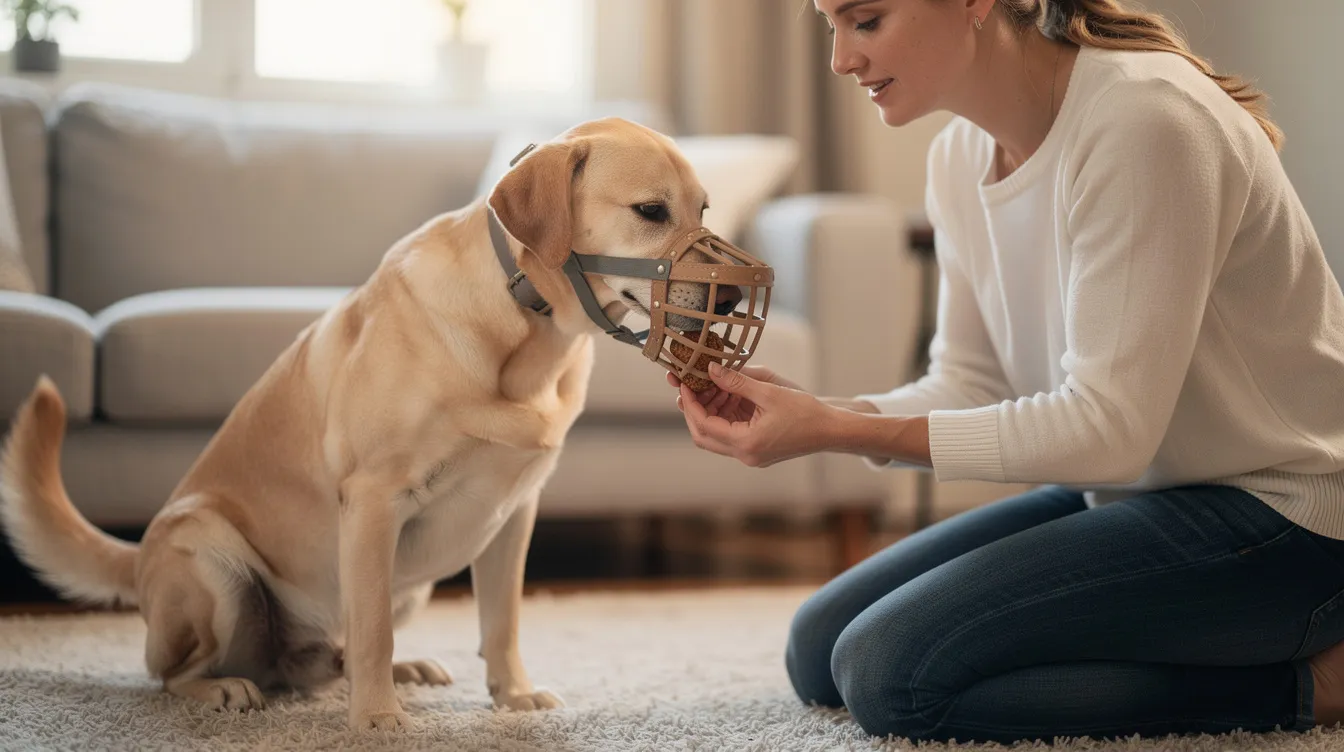
Before you start training, selecting the right muzzle determines whether your dog will feel comfortable or fight the process at every step. The type and fit of your muzzle directly influence your dog’s ability to breathe, accept rewards, and develop positive associations with wearing it.
Basket Muzzles vs Fabric Muzzles
Basket muzzles are preferred for safety and comfort in virtually every training scenario. Made from metal, plastic, rubber, or biothane, a basket muzzle provides a cage-like structure around the dog’s mouth that allows full pant room, the ability to drink water, and space to eat treats delivered through the openings. According to the American Animal Hospital Association, basket muzzles are the safest option because they permit essential behaviors like panting, drinking, and even vomiting in an emergency.
Cloth muzzles can cause overheating by restricting panting-a serious concern given that dogs dissipate heat almost entirely through evaporative cooling from their mouth and tongue. Sleeve muzzles do not allow dogs to show body language signals, which means handlers lose critical communication about the dog’s emotional state. A 2024 review on health implications of dog-worn equipment confirmed that soft muzzles pose the greatest risk of heat stress, particularly for brachycephalic breeds or in warm, humid climates like Northern Virginia summers.
Nylon muzzles are not suitable for most situations. They should only be used for very brief periods-such as a quick nail trim-and never during training sessions, walks, or extended wear.
Proper Muzzle Fit and Measurement
Selecting the right muzzle fit is essential for comfortable and effective training. A large owner survey of approximately 1,470 dogs found that 14–17% of owners selected muzzle fits that either prevented mouth opening or sat too close to the nose-both of which create discomfort and undermine training.
To measure your dog properly:
- Nose length: Measure from the tip of the nose to the stop (where the muzzle meets the forehead between the eyes). The muzzle should extend slightly beyond the nose tip without pressing against it.
- Muzzle circumference: Wrap a soft measuring tape around the widest point of the dog’s snout with the mouth closed, then add 1–2 inches to allow full mouth opening.
- Height clearance: Ensure the muzzle has enough vertical space for the dog to open their mouth fully-this is what provides adequate pant room.
- Strap fit: At least 1–2 fingers should fit between the strap and your dog’s neck and head. Straps should be adjustable, and a forehead strap adds stability without pinching.
Visual indicators of a good fit: the dog can open their mouth wide enough to pant with tongue extended, the nose doesn’t touch the front of the muzzle, and the muzzle doesn’t shift or rotate when the dog moves their head.
Recommended Muzzle Selection Criteria
| Criterion | Basket Muzzle | Fabric/Sleeve Muzzle |
|---|---|---|
| Panting ability | Full mouth opening; unrestricted | Severely limited |
| Treat delivery | Yes-through openings or front | No |
| Water access | Can drink water freely | Cannot drink |
| Duration of use | Extended wear safe | Very brief only (minutes) |
| Training suitability | Excellent-supports positive association | Poor-creates negative association |
| Heat safety | High | Low-overheating risk |
| Best use case | Training, walks, vet visits, daily management | Emergency restraint only |
For most dogs, a rubber or plastic basket muzzle with adjustable straps and a treat-accessible front opening is ideal for the training process. Some rubber models can be molded with hot water for a custom fit, which is especially useful for dogs with unusual head shapes.
Professional Step-by-Step Muzzle Training Protocol
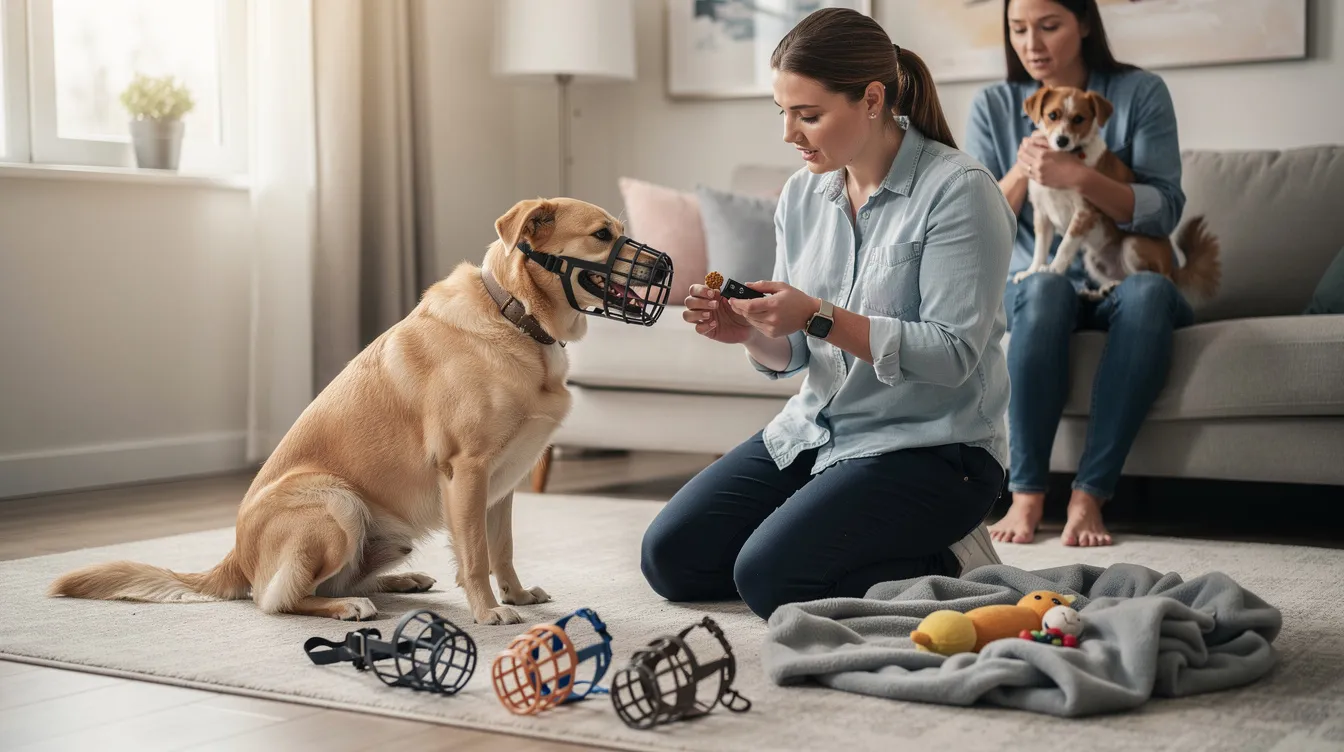
A positive reinforcement muzzle training process is gradual and involves high-value treats at every stage. The following four-phase protocol spans approximately 3–4 weeks. Keep training sessions short-generally between 1 to 5 minutes-and practice daily. End every session on a positive note, even if that means going back to previous steps where your dog was successful.
Phase 1: Creating Positive Associations (Days 1–5)
The goal of this phase is simple: your dog sees the muzzle and immediately thinks something wonderful is about to happen. You are not asking the dog to wear anything yet.
- Present the muzzle near your dog while keeping it on the ground or in your lap. Do not move it toward the dog’s face. Immediately feed high-value treats-string cheese, hot dogs, chicken, or a lick of peanut butter-just for looking at or being near the muzzle.
- Reward any curiosity. If your dog sniffs the muzzle, approaches it, or touches it with their nose or paw, mark the behavior with “yes” and deliver a treat. Let the dog investigate on their own terms.
- Build the “muzzle means good things” connection. Repeat this process multiple times: muzzle appears → treats flow. Muzzle disappears → treats stop. Your dog should begin to perk up when they see the muzzle come out.
- Practice 5-minute sessions daily in your house or a calm, familiar environment. If your dog likes a particular reward-baby food squeezed onto the muzzle basket, for example-use it generously.
- End each session before your dog loses interest. You want to build anticipation, not boredom. If your pup walks away from the muzzle, that’s fine-end the session without forcing interaction.
Introduce the muzzle with treats to create positive associations. At this point, the muzzle is simply a treat dispenser that sits on the floor.
Phase 2: Nose Insertion Training (Days 6–12)
Now you teach your dog to voluntarily put their nose inside the muzzle-a critical step that establishes the dog’s agency in the process. Dogs should voluntarily place their noses in the muzzle during training; never push the muzzle onto the dog’s face.
- Place a treat inside the muzzle basket so your dog must put their nose inside to reach it. Hold the muzzle steady and let the dog choose to investigate. Start with the treat near the opening so the nose only needs to go partway in.
- Gradually move treats deeper into the muzzle over multiple sessions. Encourage your dog to put their nose in the muzzle for treats by placing peanut butter, baby food, or a bit of cheese at the far end of the basket.
- Build duration. Once your dog comfortably puts their nose inside, gradually increase the duration your dog holds their face in the muzzle. Start with a few seconds, then work up to 10–15 seconds before delivering the reward. Lure the nose in, count silently, then reward.
- Introduce a verbal cue or hand signal. Say “muzzle” or use a consistent gesture just before presenting the muzzle. Over time, the dog learns to offer the behavior on cue-a skill that makes real-world application dramatically easier.
- Practice across multiple sessions per day. Short, frequent repetitions build muscle memory and confidence faster than one long session.
By the end of this phase, your dog should eagerly push their nose inside the muzzle when presented, holding position for several seconds while you deliver food through the basket openings.
Phase 3: Strap Conditioning and Securing (Days 13–21)
This phase introduces the sensation of the strap around the dog’s neck and head, which is often where training stalls if rushed.
- Begin with strap contact only. While your dog’s nose is inside the muzzle, gently lift the strap and let it touch the back of the dog’s neck. Reward immediately. Repeat until the dog shows no reaction to strap contact.
- Loop the strap behind the head without fastening. Let the strap rest loosely around the dog’s neck, deliver a treat, then remove everything. The dog learns that strap contact is temporary and always paired with a reward.
- Fasten the buckle briefly. Attach the muzzle strap loosely after your dog is comfortable with strap contact. Buckle it, immediately reward with a high-value treat through the muzzle, then unbuckle and remove. Repeat this process-buckle, reward, remove-gradually extending the time before removal.
- Increase secured duration. Practice wearing the muzzle for short bursts before longer sessions. Build from 10 seconds to 30 seconds to 1 minute to 5 minutes over the course of this phase. Keep feeding treats intermittently while the muzzle is on.
- Add mild distractions. Ask for a sit, practice leash walking in the house, or introduce gentle handling around the head and pet the dog while the muzzle is secured. This teaches the dog that normal life continues while wearing a muzzle.
For head-shy dogs, spend extra time on step 1 before moving forward. If your dog shows avoidance when you reach for the strap, go back to Phase 2 and rebuild duration with the nose inside before reintroducing strap work.
Phase 4: Real-World Application (Days 22–28)
Practicing muzzle use in various environments helps prevent negative associations with the muzzle. This phase bridges the gap between calm indoor practice and real-world situations where the muzzle matters most.
- Move training outdoors. Practice the full muzzle-on routine in your yard, then on quiet sidewalks, then at busier locations. Continue rewarding your dog for calm behavior while wearing the muzzle.
- Increase duration gradually. Build from 5-minute outdoor walks to 15–20 minutes. Monitor for stress signals-if your dog begins pawing at the muzzle, lip licking excessively, or freezing, shorten the duration and return to previous steps that were successful.
- Practice in context-specific locations. Visit your vet’s parking lot with the muzzle on. Walk past the groomer. Sit in a park where other dogs are present. The goal is that your dog associates the muzzle with routine, positive experiences across varied settings-not just one specific context.
- Simulate handling scenarios. While your dog is wearing the muzzle, practice light restraint, touching ears and paws, and having a helper approach-mimicking what happens during a vet visit. Reward calm behavior throughout.
- Proof against distractions. Introduce increasingly challenging environments: other dogs walking past, cats in the yard, novel sounds, and crowds. This distraction-proofing process follows the same methodology used in professional obedience training-building reliability across contexts so the behavior holds when it matters.
By the end of this phase, your dog should wear the muzzle calmly for extended periods in multiple environments, associating it with the same positive outcomes established in Phase 1.
Common Training Challenges and Professional Solutions
Even with a solid plan, challenges arise. These are the most common issues that come up during muzzle training-and the professional solutions that get things back on track.
Dog Refuses to Approach the Muzzle
If your dog won’t go near the muzzle, the issue is usually a prior negative association or general fearfulness of novel objects. Start with the muzzle on the ground at a distance where your dog shows no stress-even if that’s across the room. Reward any orientation toward it: a glance, an ear turn, a single step forward. Use distance work and counter-conditioning to gradually close the gap. Place high-value food (hot dogs, cheese, baby food) on or near the muzzle to lure investigation without pressure.
If fear persists after several days of patient work, consider a professional behavior consultation to rule out deeper anxiety issues that may require a broader behavior modification approach.
Dog Removes Muzzle Immediately After Application
This typically means duration was increased too quickly. Go back to the strap conditioning phase and rebuild. Practice the same process of buckling the strap, delivering a treat through the muzzle within one second, then removing the muzzle yourself before the dog attempts removal. The key principle: the dog should never successfully remove the muzzle on their own, because self-removal rewards the pawing behavior. You control when it comes off, and it always comes off before the dog feels the need to remove it.
Prevention is straightforward: keep training sessions short and always end before the dog reaches their tolerance limit. A few seconds of successful wearing is more valuable than 30 seconds of struggling.
Dog Shows Fear or Stress Signals
Learn to recognize stress signals: lip licking, yawning outside of tiredness, whale eye (showing the whites of the eyes), tucked tail, lowered body posture, freezing, or attempts to flee. These signals mean the dog is over threshold.
The appropriate response is to immediately reduce intensity-go back to a phase where the dog was relaxed and successful. Do not push through stress signals, as this builds the exact negative association you’re trying to avoid. If your dog consistently shows fear at a particular phase despite multiple attempts over several days, or if the dog is displaying aggressive behavior during training, it’s time to work with a qualified behavior consultant who can develop a customized plan.
Conclusion and Next Steps
Muzzle training is a great tool for every dog owner’s toolkit-not just for dogs with bite histories or aggressive tendencies. When done correctly through positive association, gradual exposure, and consistent reward-based methods, most dogs learn to enjoy wearing a muzzle as naturally as they accept a leash or collar. The process requires patience, but the payoff-a dog that can receive medical care safely, walk confidently in public, and handle stressful situations without risk-is substantial.
To move forward:
- Assess where your dog is today. If your dog has never seen a muzzle, start at Phase 1. If they’ve had negative experiences, you may need extra time in the early phases to rebuild trust.
- Select and properly fit a basket muzzle. Measure carefully, ensure your dog can pant, drink water, and eat treats through it, and invest in quality equipment.
- Practice daily in short sessions. Five minutes of focused, positive training is more effective than 30 minutes of unfocused repetition. Train your dog in calm environments first, then gradually expand to real-world settings.
- Monitor for stress signals and adjust. Your dog’s body language tells you whether to advance or repeat previous steps.
If you’re working through reactivity, aggression, or complex behavior issues alongside muzzle training, professional guidance accelerates results and prevents setbacks. Private training sessions allow a trainer to observe your dog’s specific responses and customize the protocol, while board-and-train programs can address muzzle conditioning as part of a comprehensive behavior modification plan.
Additional Resources
- Free phone consultation: Contact Off Leash K9 Training of Sterling for personalized muzzle training guidance tailored to your dog’s temperament and your specific goals.
- Behavior modification programs: For dogs where muzzle training is part of a larger plan to address reactivity or aggression, structured professional programs deliver faster, more reliable outcomes.
- In-home training options: Sterling-area residents can access private in-home sessions where a trainer works with your dog in the environment where muzzle skills will actually be used-your house, your yard, your neighborhood walking routes.
- Cornell University muzzle training resource: The Riney Canine Health Center’s muzzle training guide provides additional veterinary perspectives on equipment selection and conditioning protocols.
