 Skip to content
Introduction
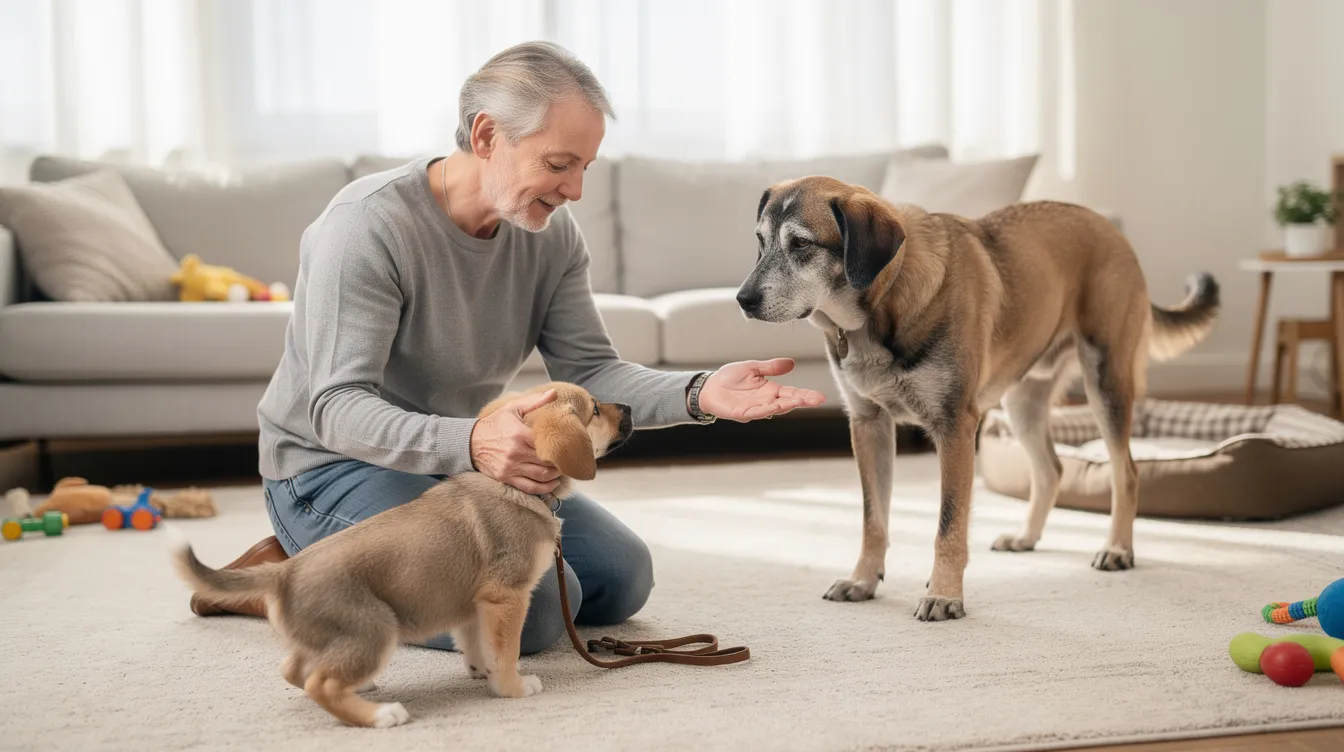
Introducing a puppy to an older dog requires patience, careful planning, and a structured approach that respects both animals’ needs. Whether your resident dog is a mellow seven-year-old Labrador or a feisty ten-year-old terrier, the way you manage their first meeting and the weeks that follow will determine whether your two dogs become comfortable housemates-or a source of ongoing stress for everyone in the family.
This guide covers everything from pre-introduction preparation and environment setup to meeting protocols and long-term integration strategies. While written with Sterling, VA dog owners in mind, the techniques apply to any multi dog household. The target audience is anyone with a current dog who is considering bringing home a new puppy-especially owners who want reliable, professional-grade results and are open to working with a professional dog trainer when the situation calls for it.
Most successful puppy introductions follow a 3-phase approach spanning 2 to 4 weeks: Phase 1 involves a first meeting on neutral ground; Phase 2 focuses on supervised home integration with structured separation; and Phase 3 gradually increases freedom as both dogs demonstrate calm behavior. Adjustments between dogs can take weeks or months and should be approached gradually.
By the end of this guide, you will:
- Understand older dog psychology and why age-based territoriality shapes introduction strategy
- Master safe, structured introduction techniques backed by canine behavior science
- Recognize early warning signs of stress, fear, and aggression in both dogs
- Know how to establish a harmonious household with clear boundaries and individual spaces
- Understand when and why to call in a professional dog trainer or veterinary behaviorist
Understanding Canine Pack Dynamics and Age Differences
In domestic dog groups, social hierarchies are often linear and significantly correlated with age. Research (including studies by Bonanni et al.) has shown that older dogs frequently dominate younger dogs unless other factors like health or gender intervene. This matters for introductions because your adult dog likely expects a degree of deference from a new puppy-and puppies tend to violate those expectations constantly through jumping, mouthing, and relentless play invitations.
Understanding this natural dynamic doesn’t mean enforcing rigid “alpha” rules (misapplied dominance concepts often cause more harm than good). It means recognizing that your existing dog has social expectations, and your puppy lacks the communication skills to meet them. Structuring introductions around this reality is the foundation of success.
Older Dog Psychology and Territorial Behavior
An adult dog considers their own home, yard, food bowls, toys, and preferred resting spots part of their established domain. When a new dog appears in that space, territorial instincts can trigger defensive reactions-growling, snapping, or resource guarding. This response intensifies when the older dog has historically been the one dog in the household.
Dogs reaching approximately 6 years of age (earlier for large and giant breeds) often experience age-related changes in energy, joint health, and sensory acuity. Older dogs often have less physical and emotional energy for a puppy’s antics. Arthritis, diminished vision, or hearing loss can make a senior dog less tolerant of being bumped, climbed on, or startled. Recognizing these limitations isn’t optional-it’s central to keeping both animals safe. As the AKC notes, senior dogs may suffer physically or mentally from constant puppy harassment, and their established routines deserve respect throughout the transition.
Puppy Development and Communication Skills
Puppies lack mature communication skills compared to adult dogs. Their greetings are overly physical, mouthy, and repetitive. They misread or completely ignore the subtle body language an adult dog uses to set boundaries-posture shifts, ear positioning, turning away, or a hard stare. Puppies lack refined social etiquette and can provoke defensive reactions in older dogs simply because they don’t yet understand the rules.
The critical socialization window falls roughly between 3 and 14 weeks of age, with the 8- to 16-week period being especially sensitive. Experiences during this stage shape adult behavior significantly, which is why starting training early and providing structured social exposure matters so much. A pup who learns appropriate behavior around other puppies and adult dogs during this window is far more likely to integrate smoothly into an established household.
Breed, size, and temperament also play a role. A giant breed puppy can physically overwhelm a smaller senior dog. A herding breed pup may have high arousal levels that exhaust a low-energy companion. Not every dog adjusts at the same pace, and not all dogs will become best friends-but most dogs can learn to coexist peacefully with the right approach.
The natural tension created by these age and communication gaps is precisely why preparation matters so much before the two dogs ever share the same space.
Pre-Introduction Preparation and Environment Setup
Understanding pack dynamics and age differences tells you why introductions go wrong. Preparation tells you how to prevent it. Before bringing home your new puppy, invest time in modifying your home environment, introducing scents, and confirming both dogs are medically cleared for interaction.
Home Environment Modifications
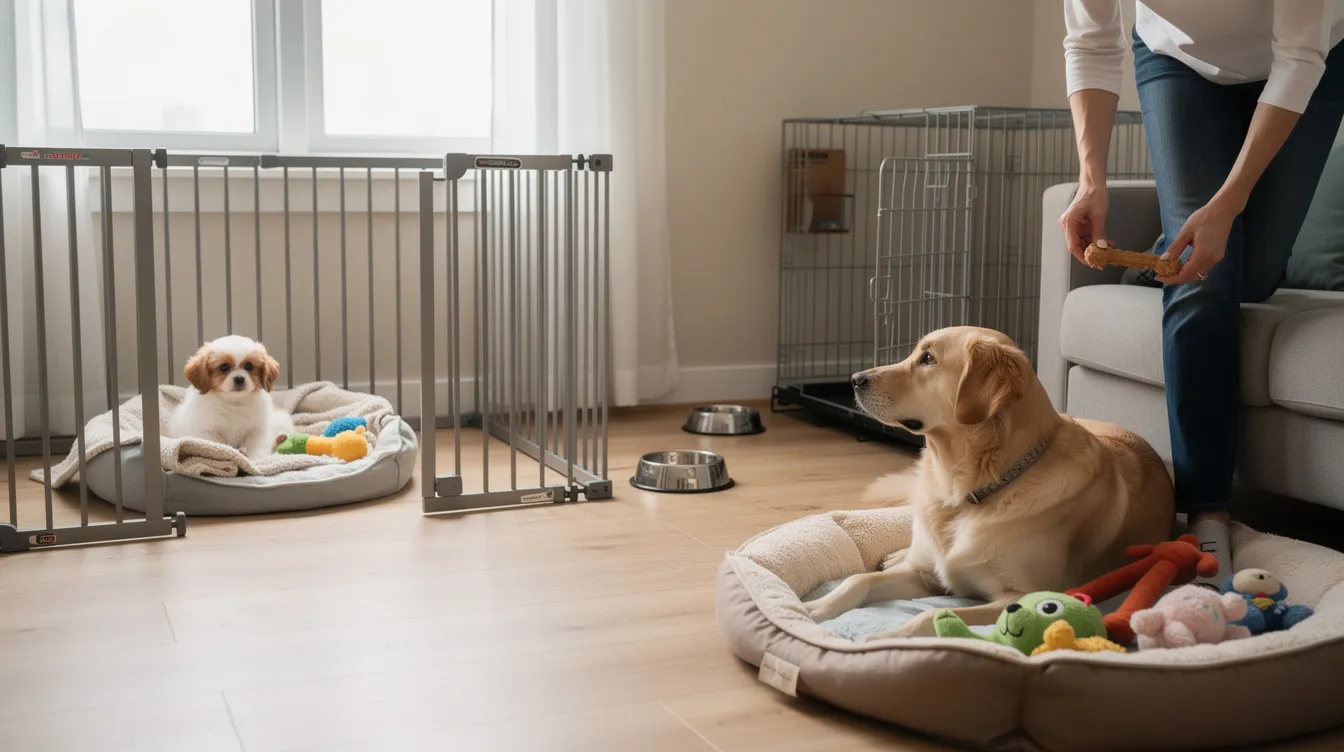
Create clearly separate physical spaces so your resident dog retains access to their preferred spots without disruption. Use baby gates, crates, and exercise pens to control when and where the two dogs interact. Your older dog’s crate or resting den should remain undisturbed; place the puppy’s crate in a more neutral room. Provide escape routes for both dogs during introductions so neither feels trapped.
Set up separate feeding stations in different, quiet locations-each dog should eat from their own bowl without the other dog nearby. Remove high-value toys that could spark competition. Keep multiple water bowls accessible throughout the house. Use crates, gates, and pens for scheduled separation, particularly during the first several weeks. This gives each dog their own space and prevents the kind of forced proximity that escalates tension. Crate training is a valuable skill for both dogs during this process.
Scent Introduction and Familiarization
Before the dogs meet face to face, introduce each other’s scent. Swap blankets or bedding containing each dog’s smell several days in advance. Let your older dog investigate the puppy’s scent at their own pace while you reward calm behavior with treats.
Rotate toys the puppy has used so the older dog can explore them, and vice versa. This gradual scent conditioning builds familiarity with the other’s scent before any physical meeting takes place. If possible, bring home items from the puppy’s breeder or shelter so your current dog becomes accustomed to the new arrival’s smell before the first time they share the same room.
Health and Safety Preparations
Puppies should meet adult dogs after vaccinations are complete. Ensure the pup has received core vaccines (distemper, parvovirus, adenovirus, parainfluenza) and confirm your senior dog’s vaccination status and parasite prevention are current. Schedule vet checkups for both dogs before any interaction. Senior dogs may have invisible health issues-pain, joint problems, or sensory deficits-that reduce their tolerance for a rambunctious pup.
Have essential tools ready: leashes, harnesses, crates, gates, and training mats. Time the introduction to avoid major routine disruptions. And have an escalation plan: if aggression, fear, or persistent rejection arise, behavior consultation services or a veterinary behaviorist should be your next call.
The Structured Introduction Process and Methods
With your home prepared, scents exchanged, and both dogs medically cleared, it’s time to introduce them. This process works best in distinct phases, each building on the previous one.
Phase 1: Neutral Territory First Meeting
Introduce dogs in a neutral location to avoid territorial behavior. A friend’s fenced yard, a quiet corner of a park, or any neutral area where neither dog has established ownership works well. Whole Dog Journal and the AKC both strongly recommend this approach.
Here’s the step-by-step process:
- Choose a neutral location free from distractions-a quiet park, empty yard, or dedicated sniff-and-greet space. Avoid areas where your older dog regularly walks.
- Use separate handlers for each dog. Using separate handlers for each dog ensures safer management during introductions-one person per leash, each focused on reading their dog’s signs.
- Begin with parallel walking at approximately 20 feet apart. Let both dogs acclimate to each other’s presence without direct contact. Watch for relaxed body language: loose tail wag, soft eyes, a play bow.
- Gradually reduce distance based on comfort. If either dog shows signs of stress-stiff posture, hard staring, hackles raised-increase distance immediately. Tense dogs may hold their breath and stare intensely.
- Allow brief supervised sniffing when both appear calm and interested. Nose-to-nose, side sniffing, and tail investigation are all normal. Initial meetings should be brief and should focus on calm behavior-keep sessions to 5–10 minutes and end on a positive note.
Reward calm behavior during introductions to reinforce positive interactions. Use high value treats for both dogs when they demonstrate relaxed, appropriate behavior near each other. Puppies need supervision to learn appropriate social skills, so stay attentive throughout.
Introduction Method Comparison
| Criterion | Neutral Territory First | Home Introduction First |
|---|---|---|
| Territorial stress | Low-neither dog claims the space | High-older dog defends home turf |
| Safety control | Moderate-requires travel, possible distractions | Higher physical control, but emotional pressure on older dog |
| Recommended for | Most dogs, especially territorial or anxious adult dogs | Only when neutral territory is unavailable |
| Follow-up ease | Natural progression to home integration | May require backtracking if first meeting goes poorly |
For most dogs, a neutral territory meeting followed by a structured home introduction yields the strongest results. The older dog’s personal space is respected, and the puppy learns early that the house has rules.
Phase 2: Supervised Home Integration
After one or more successful neutral meetings, it’s time to bring the puppy home. Maintain structured separation using gates and crates, allowing brief, supervised interactions that gradually increase in duration.
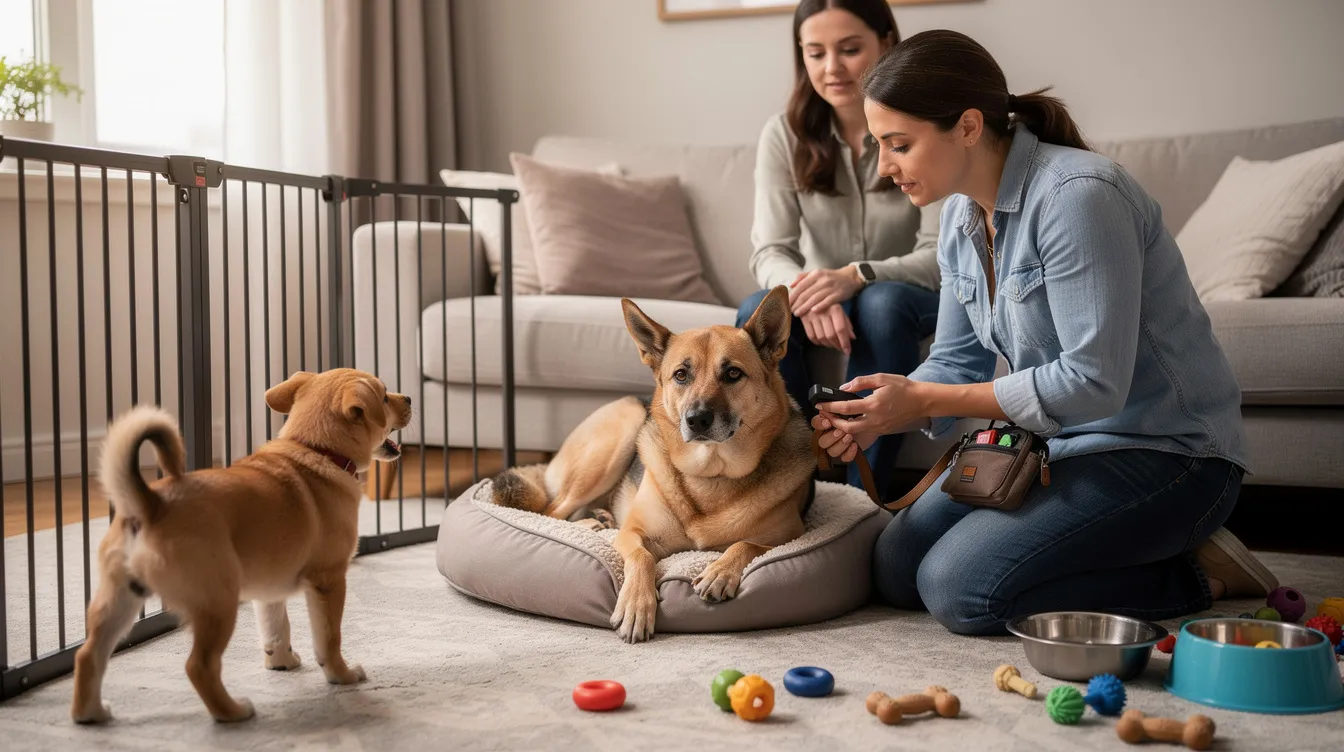
Practice mat or relaxation exercises: place both dogs on separate mats in the same room, rewarding each dog separately for staying calm. Start with 5-minute sessions and build to 20 minutes over several days, gradually moving the mats closer as both dogs show stable behavior. Supervise all interactions to ensure safety for both dogs.
Keep the puppy on a leash or long line during early home sessions, giving the older dog full range of movement and choice. This prevents the pup from overwhelming the older dog with unwanted attention. Puppies should have designated rest times to prevent overwhelming older dogs-schedule naps, crate time, and solo play to give your resident dog regular breaks.
Critically, maintain the older dog’s routine. Giving the older dog priority during walks, meals, and affection helps reduce jealousy. Walk them first, feed them first, and provide one-on-one time with human family members each day so they don’t feel displaced. Only increase unsupervised together time after both dogs consistently demonstrate relaxed, stable behavior with no growling, snapping, or prolonged avoidance. Supervising all interactions in the first few weeks is critical to ensuring safety.
Common Challenges and Professional Solutions
Even with careful preparation, challenges arise. Here’s how to handle the most common issues-and when to bring in professional help. At Off Leash K9 Training, we see these scenarios regularly in private training sessions and behavior consultations.
Resource Guarding Between Dogs
Resource guarding occurs when one dog-often the older dog-becomes defensive around food, toys, treats, or resting places. Signs include stiffening, growling, snapping, or blocking access to valued items.
The solution: separate the dogs during feeding, remove high-value items before interactions, and never punish guarding behavior. Avoid punishing growls as they communicate discomfort-suppressing growling removes the warning system and increases the risk of a bite without warning. Removing high-value items before interactions can reduce resource guarding between dogs. Gradually reintroduce shared spaces with distance and counterconditioning. For persistent guarding, a professional behavior modification program that uses desensitization and counterconditioning is essential.
Excessive Puppy Pestering of Older Dog
Puppies naturally seek play-sometimes relentlessly. For an older dog with lower energy or health issues, this constant pestering causes stress and can lead to defensive aggression.
Teaching puppies manners can help them coexist more peacefully with older dogs. Teach the pup impulse control commands like “leave it,” “settle,” and “place.” Use a leash or long line during early integration to give the older dog breathing room. Scheduled breaks help reduce stress for both dogs during interactions. Provide breaks for the older dog from the puppy by using crate time, gated rooms, or tethering the pup during structured rest periods. When the puppy learns to control their excitement and respect the other dog’s personal space, the household runs more smoothly. Puppy obedience training is one of the most effective investments you can make during this phase.
Equally important: don’t punish the older dog for communicating boundaries. Growling is a natural warning signal from adult dogs to puppies. Signs of stress in older dogs should be respected to prevent aggression. A growl, lip lift, or turn-away means the older dog needs space-honor that signal by separating the dogs and giving each a safe place to decompress. Signs of discomfort include turning away and lip licking, while a happy dog has a loose body and wags its tail.
Older Dog Aggression or Rejection
Sometimes an adult dog shows substantial aggression-lunging, biting, or a complete refusal to tolerate proximity. This is particularly dangerous when either dog is very large or physically fragile.
Seek immediate professional intervention when any of the following occur: teeth make contact, wounds result, prolonged refusal to coexist persists, or the older dog shows signs of fear or anxiety that don’t improve with structured management. A veterinary behaviorist can evaluate for underlying pain (arthritis, vision or hearing loss), design a desensitization program, and recommend medication if needed. Not all dogs will accept a new companion, and professional assessment helps determine realistic expectations.
Behavioral issues are the top reason for dog relinquishment in dogs under 3 years-early professional intervention can prevent that outcome.
Conclusion and Next Steps
Successfully integrating a new puppy into a home with an older dog demands patience, proper sequencing, and respect for both animals’ needs. Introducing a new puppy to an older dog requires patience and careful planning-there are no reliable shortcuts. Prepare your home with separate spaces and feeding areas, start with neutral territory meetings, progress to supervised home integration, and expand freedom only as both dogs earn it through consistent calm behavior. Adult dogs may need time to adjust to a new puppy’s presence, and that timeline varies.
Here are your immediate actionable steps:
- Schedule a free phone consultation with Off Leash K9 Training of Sterling to discuss your specific situation
- Assess your current dog’s temperament-document their reactions to other dogs, any signs of stress or guarding, and their overall energy level
- Prepare your home environment now-set up gates, create separate feeding areas, and begin scent conditioning before the puppy arrives
- Confirm both dogs are vet-cleared and up to date on vaccinations and parasite prevention
If you want to build a strong foundation beyond introductions, explore related topics like advanced obedience training for multi dog household management, puppy socialization classes, and ongoing behavior support through board and train programs.
Additional Resources
- Free Consultation: Contact Off Leash K9 Training of Sterling for a complimentary phone consultation about your introduction plan, private lessons, behavior consultation, or board and train options
- Puppy Programs: Explore puppy obedience training designed to teach impulse control, socialization skills, and foundational commands that make multi-dog living easier
- Behavior Support: For resource guarding, aggression, or anxiety, our behavior modification services provide structured, guaranteed results
- Further Reading: Review our guide on what aggressive dog behavior looks like to sharpen your ability to read warning signs early
