 Skip to content

Introduction
Dogs circle before lying down because of deeply rooted evolutionary instincts inherited from wolves and wild canines that once needed to prepare safe, comfortable sleeping areas in unpredictable environments. This commonly observed behavior-where dogs turn in circles, paw at blankets or pillows, and then finally settle-is one of the most recognizable rituals in the canine world, and it connects every domesticated dog on a plush bed to its wild ancestry thousands of years ago.
This article covers the full spectrum of why dogs spin before rest: from the survival origins of the behavior, to the physiological and psychological science behind it, to the critical distinction between normal circling and patterns that signal health concerns. Whether you’re a first-time pet owner curious about your puppy’s bedtime habits or you’re worried about an older dog that seems to circle excessively, this guide will help you understand what’s happening and when to act.
The direct answer: Dogs circle before lying down due to evolutionary instincts for safety, comfort, and temperature regulation passed down from their wolf ancestors. Circling behavior may be a holdover from genes passed down through generations, when wild animals needed to flatten tall grass, scan for potential predators, and create insulated nests before becoming vulnerable in sleep.
Here’s what you’ll gain from this article:
- A clear understanding of the evolutionary origins behind why dogs turn in circles before rest
- The ability to recognize normal circling behavior versus excessive or concerning patterns
- Knowledge of specific medical conditions-including vestibular disease, arthritis, and cognitive dysfunction-that can alter circling behavior
- Practical guidance for creating optimal rest environments, including providing orthopedic beds for senior dogs
- Clear criteria for when to seek veterinary advice or professional behavioral support
Understanding Canine Evolutionary Instincts
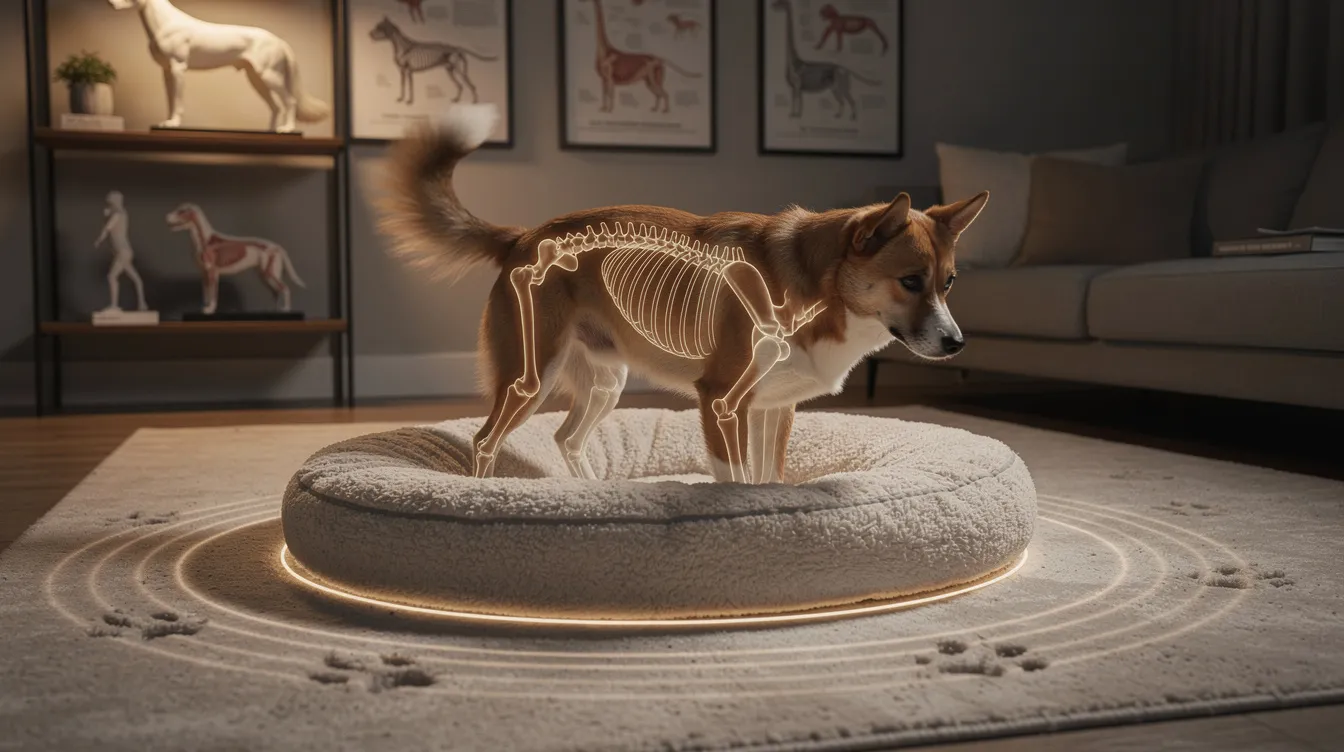
The circling ritual your dog performs before lying down is what behavioral scientists call a fixed action pattern-an innate, genetically encoded behavior sequence that runs to completion once triggered. In dogs, this sequence typically includes walking, circling, pawing or scratching the surface, and then settling into a comfortable position. This instinct persists in domestic dogs even when the original environmental pressures-tall grass, predators, uneven terrain-no longer exist.
Wild Ancestry and Survival Mechanisms
Wild wolves and wild dogs relied on circling as a critical survival strategy. Before resting, they would circle to trample down tall grass or snow, flatten vegetation, and clear debris from their sleeping area. This created a level, body-shaped nest that offered both comfort and concealment. Dogs pat down grass or snow to make their bed-a behavior that directly translates to your dog scratching at blankets or kneading their bed at home.
The digging and scratching that often accompanies circling helped wild canines mold the ground to their body shape, creating a depression that offered protection from wind and the elements. Modern domesticated dogs retain these deeply ingrained behaviors even on memory foam beds and living room couches, re-enacting an ancestral nesting process that served their canine ancestors for millennia. This behavior connects domestic dogs to their wild ancestry in one of the most visible ways pet owners witness daily.
Pack Safety and Territory Assessment
Circling wasn’t only about comfort-it was fundamentally about safety. Dogs circle to check for potential dangers before resting, and this vigilance behavior traces directly to pack life in the wild. Before becoming vulnerable in sleep, wild wolves and wild dogs would orient their bodies with respect to wind direction so they could detect the scent of potential predators approaching.
Circling allows dogs to check for hidden threats before resting by giving them a 360-degree survey of their surroundings. In a pack context, this also helped establish sleeping arrangements: each animal could assess where other pack members were positioned and orient themselves accordingly. Even today, most dogs perform this brief environmental scan before settling, a vestigial act that once meant the difference between life and death.
Circling can also be associated with territorial marking due to scent glands in their paws. When dogs circle and scratch at their sleeping area, they deposit scent from these glands, effectively marking the spot as their own territory-a subtle but important communication to other animals.
Environmental Preparation Rituals
Beyond safety and territory, circling helped wild animals prepare their immediate environment. The circling movement helps scare away pests like bugs or snakes in their bedding area-a practical function that was essential for survival in regions where venomous snakes or biting insects posed real threats. By disturbing the ground cover before lying down, wild canines reduced the risk of sharing their bed with other dangers.
This environmental preparation extended to removing sharp sticks, rocks, or thorny vegetation that could cause injury during sleep. While your canine friends may never encounter a snake in their own beds, the instinct to prepare and clear their resting spot remains hardwired. It’s a reminder that what looks like a quirky habit is actually the echo of an elaborate survival ritual refined over thousands of generations.
The Science Behind Modern Circling Behavior
While evolutionary instincts explain the origin of circling, modern veterinary science and dog behaviorists have identified additional physiological and psychological reasons why dogs continue this behavior-reasons that go beyond simple ancestral memory.
Temperature Regulation and Comfort Optimization
Circling helps dogs regulate their body temperature in ways that mattered enormously in the wild and still influence behavior today. In hot climates, wild canines would circle and dig to expose cooler soil beneath sun-baked surface layers, creating a naturally cooled resting spot. In cold weather, the act of circling and then curling into a tight ball helped conserve body heat by minimizing exposed surface area.
Dogs circle to create a comfortable resting spot, and body temperature regulation is a significant part of that comfort equation. Even indoors, dogs may circle more on warm days, seeking the coolest spot on a tile floor, or burrow into blankets during winter to retain warmth. Circling helps dogs regulate their body temperature while resting by allowing them to assess the thermal properties of a surface before committing to a position. This behavior persists because temperature is not the only reason dogs circle-but it remains an important one.
Physical Positioning and Joint Comfort
Dogs turn in circles to ease muscles and find a comfortable position for their joints. This physical assessment function becomes increasingly important as dogs age. Circling lets dogs test surface firmness, texture, and evenness before lying down. Research observations suggest dogs are significantly more likely to circle at least once before settling on uneven or soft surfaces compared to hard, flat floors.
For dogs with arthritis, hip dysplasia, or other joint conditions, this surface testing becomes even more critical. Circling can signal discomfort from joint or muscle pain-the dog is essentially searching for a position that minimizes pressure on painful areas. Senior dogs or large-breed dogs with osteoarthritis may show more pronounced circling with multiple false starts: attempting to lie down, rising again, shifting position, and repeating the process before finally finding a tolerable arrangement.
Psychological Preparation and Stress Reduction
Circling provides mental reassurance and comfort for dogs. Beyond the physical reasons, the ritual serves as a psychological bridge between activity and rest. Circling can calm a dog’s nervous system before sleep, functioning as a self-soothing behavior that helps shift a dog’s arousal state from alertness to relaxation. This is similar to how humans might have bedtime routines-reading, dimming lights-that signal the brain it’s time to sleep.
The repetitive motion of circling creates familiar “nesting” cues that reinforce a sense of security: this is my bed, this is where I rest, this space is safe. While rigorous experimental data on this psychological function remains limited, behavioral biologists consistently reference the calming and transitional role that circling plays in canine rest preparation.
In summary, modern circling behavior serves three overlapping purposes: thermal comfort, physical positioning, and psychological readiness. Understanding these functions helps pet owners appreciate that circling is not just a quirky leftover instinct-it’s an active, functional behavior. But what happens when this normal ritual starts looking different?
Normal vs. Concerning Circling Patterns
Now that we understand why most dogs circle before rest, the critical question for pet owners becomes: when does this normal behavior cross into territory that warrants concern? The difference often lies in duration, intensity, and accompanying signs.
Characteristics of Healthy Circling Behavior
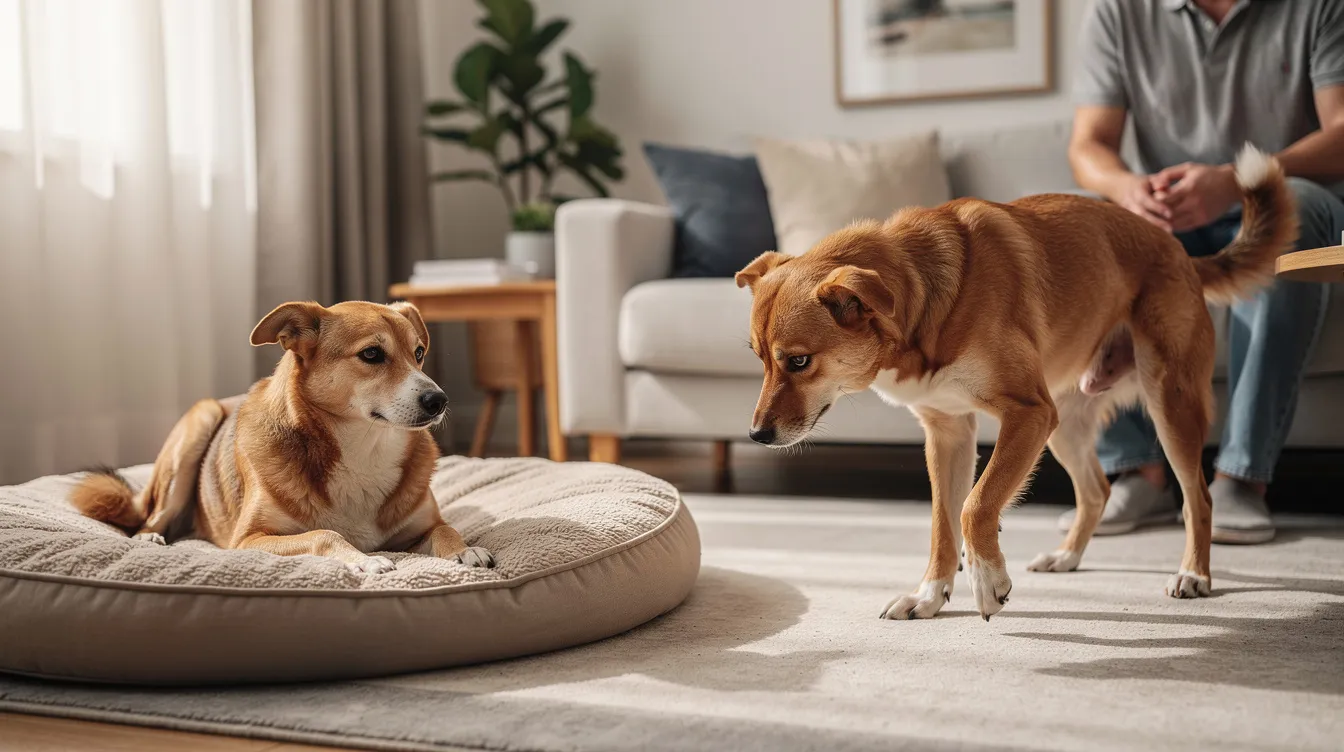
Healthy circling is brief, purposeful, and ends in settling. A typical dog will make one to three calm revolutions before lying down in a comfortable position-curled, stretched out, or somewhere in between. The entire process takes only a few seconds and occurs predictably at rest times: bedtime, nap time, or when finding a spot on the couch.
Age-related variations are normal. Puppies may circle with more energy and less precision, sometimes overshooting their target spot. Adult dogs tend to be efficient-a quick turn or two and they’re down. Senior dogs may circle slightly more slowly as they carefully test the surface, though the behavior should still resolve in settling. The key markers of normal circling: it’s calm, it’s brief, and it leads to rest.
Dogs circle to create a comfortable resting spot, and when the behavior follows this pattern, there is nothing wrong. It’s simply your dog being a dog.
Red Flag Indicators Requiring Attention
When circling behavior changes, paying attention to the details can reveal important information about your dog’s health. Here’s how to distinguish normal behavior from patterns that deserve a closer look:
| Indicator | Normal Behavior | Red Flag |
|---|---|---|
| Number of revolutions | 1–3 circles | 5+ circles, or unable to stop |
| Duration | A few seconds | Minutes of continuous circling |
| Outcome | Settles into rest | Difficulty settling or repeated failed attempts |
| Timing | Only before lying down | Circling at random times, unrelated to rest |
| Direction | May vary | Always circling in one direction |
| Accompanying signs | None | Whining, limping, head tilt, stumbling |
| Progression | Consistent over time | Gradually worsening or suddenly appearing |
Any single red flag item may not indicate a serious problem, but combinations-or sudden onset in older dogs-should prompt veterinary advice.
Medical Conditions Associated with Excessive Circling
Excessive circling may indicate pain or discomfort in dogs, and several specific medical conditions can alter this behavior:
Vestibular disease is one of the most common causes of abnormal circling, particularly in senior dogs. Sometimes called “old-dog vestibular disease,” this condition involves the inner ear structures that control balance. Dogs with vestibular disease typically circle continuously in one direction, display a pronounced head tilt, show nystagmus (rapid eye movement), and stumble or fall. The onset is often sudden and frightening for owners, but many dogs begin improving within one to two weeks, with significant recovery by three weeks-though a residual head tilt may remain. Some breeds, including French Bulldogs and Cavaliers, appear overrepresented in vestibular system disorders.
Arthritis and joint disorders significantly affect how dogs prepare for rest. Arthritis can cause dogs to circle repeatedly before lying down as they search for a position that reduces joint pain. Approximately 20% of dogs suffer from clinically significant osteoarthritis, with risk factors including large breed size, excess weight, and prior orthopedic injuries. Signs include stiffness after rest, reluctance to jump or climb stairs, and visible limping.
Neurological conditions can lead to disoriented circling in dogs. Canine cognitive dysfunction-similar to dementia in humans-affects senior pets and can cause disorientation, confusion, nighttime wandering, and an inability to settle. Older dogs may circle excessively due to neurological issues including brain tumors, strokes, or inner ear infections. When circling is accompanied by confusion, altered behavior patterns, or other neurological signs, professional evaluation is essential.
Understanding these conditions supports early detection-recognizing that a change in your dog’s circling pattern could be the first visible sign of an underlying health issue.
Common Circling Challenges and Solutions
For pet owners dealing with circling behavior that has moved beyond the normal range, here are practical approaches organized by the most common underlying causes.
Excessive Circling Due to Pain or Discomfort
When circling becomes prolonged or is accompanied by stiffness, reluctance to lie down, or whining, pain is a likely factor. The first step is a thorough veterinary examination, including orthopedic assessment of the hips, elbows, and spine, with diagnostic imaging if warranted.
Management strategies include providing orthopedic beds that offer supportive cushioning for sore joints, maintaining a healthy weight to reduce joint stress, and following prescribed pain management protocols. Creating a dedicated safe space with warm, supportive bedding placed in an easily accessible location-no stairs or jumping required-can dramatically reduce the number of failed settling attempts. Orthopedic beds with bolstered sides give dogs something to lean against, which many dogs with joint pain find especially comforting.
Anxiety-Driven Compulsive Circling
Some dogs develop excessive circling as a displacement behavior in response to stress, unfamiliar environments, or separation anxiety. This type of circling often occurs alongside other anxiety indicators: panting, pacing, destructive behavior, or inability to settle even in familiar settings.
Solutions focus on environmental management and behavior modification. Establishing consistent bedtime routines provides predictable cues that help anxious dogs transition to rest. Familiar comfort items-a specific blanket, a consistent sleeping area-reinforce security. For dogs with deeper anxiety patterns, structured behavior modification techniques like counterconditioning and desensitization, ideally guided by a professional behavior consultant, can address the root cause rather than just the symptom. Training a “settle” cue that incorporates the natural circling motion into a calm lying-down sequence can be particularly effective.
Senior Dog Mobility and Confusion Issues
Senior pets often face compounding challenges: arthritis combined with cognitive decline, possibly alongside vestibular changes. This combination can make the simple act of lying down genuinely difficult.
Environmental modifications are critical: non-slip surfaces on floors, mobility aids like ramps instead of stairs, multiple beds placed throughout the home so the dog never has to travel far to find a resting spot, and low-level nighttime lighting to reduce disorientation. Medical management should address each contributing condition-pain management for arthritis, nutritional supplements or medications for cognitive support, and treatment for any vestibular component. Lifestyle adjustments such as shorter but more frequent walks, consistent daily routines, and gentle guidance to their bed can make a meaningful difference in quality of life.
Regular veterinary checkups-at minimum twice yearly for senior dogs-allow for monitoring and early intervention as conditions evolve.
Conclusion and Next Steps
Circling before lying down is one of the most natural, deeply encoded behaviors in the canine repertoire. It traces back to a time when wild wolves and wild dogs needed to flatten grass, survey for predators, regulate body temperature, and create secure nests in an unforgiving landscape. For most dogs, the ritual is perfectly normal-a brief, satisfying echo of their wild heritage performed on their own beds every day.
However, changes in circling patterns can be among the earliest visible indicators of pain, joint disease, vestibular dysfunction, or cognitive decline. The distinction matters, and paying attention to your dog’s rest behavior is one of the simplest forms of health monitoring available.
Your immediate next steps:
- Observe and baseline: Note your dog’s current circling pattern-how many circles, how long, how smoothly they settle
- Optimize the rest environment: Ensure your dog has a comfortable, supportive bed in an easily accessible, draft-free location
- Monitor for changes: Watch for increases in circling duration, one-directional circling, difficulty settling, or accompanying signs of discomfort
- Seek professional guidance: If you notice red flag indicators, schedule a veterinary checkup; for anxiety-related issues, consider a professional behavior consultation
Understanding why your dog circles is more than satisfying curiosity-it’s a practical tool for better care. Related topics worth exploring include other instinctual canine behaviors, building your dog’s confidence through training, and comprehensive approaches to senior dog wellness.
Additional Resources
If your dog’s circling behavior has you concerned-whether it seems excessive, anxiety-driven, or linked to difficulty settling-Off Leash K9 Training of Sterling offers behavior consultation services that can help identify underlying causes and develop tailored solutions. Free phone consultations are available for owners who want professional perspective on whether their dog’s behavior falls within normal range or warrants further evaluation.
For dogs dealing with anxiety, compulsive behaviors, or broader obedience challenges that affect their ability to rest and relax, structured training programs address these issues within a comprehensive behavioral framework-helping dogs develop the calm confidence that makes settling into rest as natural as the instinct that starts the circle.
