 Skip to content

Introduction
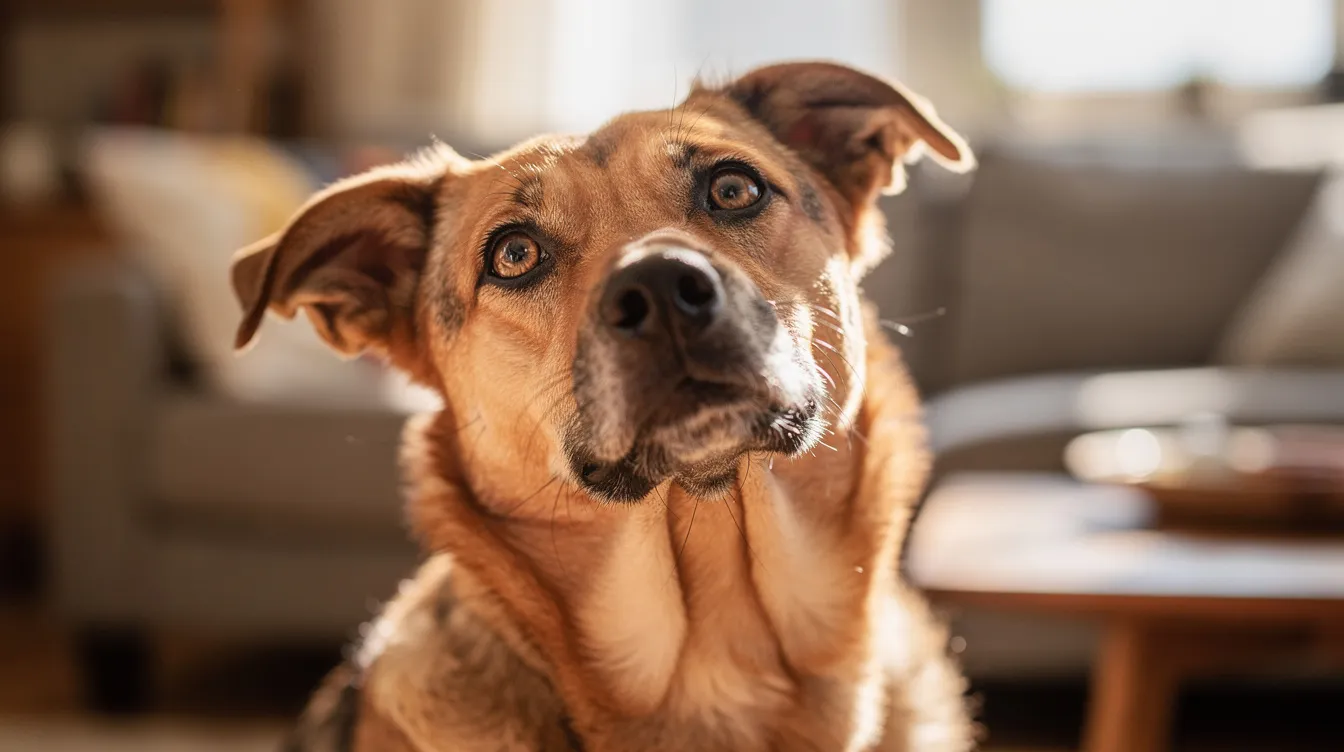
Dogs tilt their heads to optimize sound detection, adjust their visual perspective around their muzzles, and respond to human communication cues like speech patterns and facial expressions. That cute canine head tilt you see when you talk to your dog is a sensory adjustment, not just an adorable quirk.
This article covers the primary reasons behind canine head tilt behavior, the difference between a normal occasional head tilt and a more persistent head tilt that signals medical trouble, and how dog owners in Northern Virginia can apply these insights during training. If your dog cocks its head when you speak, you are watching a real-time sensory calculation. If that head tilt persists for hours or days, you may be looking at an ear or neurological disorder that requires veterinary attention.
A brief head tilt often reflects curiosity or engagement. A persistent head tilt may indicate a medical issue such as ear infections, vestibular disease, or a neurological disorder.
After reading this, you will understand:
- Why dogs tilt their heads in response to sounds, words, and facial expressions
- How to distinguish normal head tilting from warning signs of illness
- Which medical conditions cause persistent head tilts and what outcomes to expect
- How to use head tilting as a training indicator and manage attention-seeking behavior
- When to schedule a veterinary consultation
Understanding Canine Head Tilting Behavior
Head tilting is a natural canine behavior in which a dog temporarily positions its head with one ear lower than the other. These head movements are brief (lasting seconds), context-dependent, and tied to sensory processing. Dogs use head tilts to gather auditory and visual information from their environment, making them a core part of how dogs communicate with the world around them.
The Science Behind Head Tilting
Dogs have movable ear flaps that rotate independently to capture sound waves from different directions. A dog’s directional hearing relies on the difference in arrival time and intensity of a sound between its two canine ears. When a dog hears a strange sound or an interesting sound from an uncertain direction, adjusting ear flaps helps reposition the ear canal relative to the sound source.
Dogs can detect frequencies up to 45,000–60,000 Hz, compared to the human ceiling of roughly 20,000 Hz. This normal hearing ability means dogs process a wider range of auditory stimulation than humans do. When a dog tilts its head, it may be recalibrating its ear flap position to achieve optimum sound collection from a specific direction, especially for higher-frequency sounds where even small head position changes affect sound wave transmission.
Normal vs Abnormal Head Tilting
A healthy, occasional head tilt lasts a few seconds and occurs in direct response to a stimulus: a voice, a whistle, or a new noise. The dog returns to a neutral head position once the stimulus ends. Emotional signals like curiosity or uncertainty can accompany a head tilt, and the behavior is dynamic rather than fixed.
Abnormal head tilting looks different. A persistent head tilt lasting more than 24 hours, or one accompanied by loss of balance, abnormal eye movements (nystagmus), ear discharge, or disorientation, points to a medical problem. Neurological issues may accompany an abnormal head tilt in dogs. Context matters when interpreting a dog’s head tilt behavior; the distinction between a curious tilt and a medical symptom comes down to duration, accompanying signs, and whether the tilt resolves on its own.
Primary Reasons Dogs Tilt Their Heads
Three mechanisms explain most normal head tilts: sound localization, visual adjustment, and learned social behavior. Each operates through a different sensory or behavioral pathway.
Enhanced Sound Localization
Dogs tilt their heads to optimize sound detection. A dog’s head tilt helps assess sound location and distance by changing the angle of both canine ears relative to a sound source. Because sound waves reach each ear at slightly different times, even a small change in head angle alters that time difference, giving the brain better data to pinpoint a sound’s distance and exact location.
Breed differences in ear shape matter here. A German Shepherd’s ear flap stands upright (perky ears), while a Basset Hound’s heavy ear flaps completely cover the external ear canal. Dogs perk their ears forward when alert, but breeds with heavy, pendulous ear flaps may need more head tilting help to clear the canine ear flap away from the ear canal for better sound transmission. Head tilting can help dogs judge sound distance regardless of breed, but the degree of tilt a dog needs depends on whether its ear flaps obstruct the external ear canal caused by breed-specific anatomy.
Active listening can cause dogs to tilt their heads towards sounds. Dogs may tilt their heads in response to unfamiliar sounds or words, which aligns with research showing that a sample of 103 pet dogs performed head tilts more frequently when owners used familiar words and communicative speech patterns. About 40% of dogs in that study tilted during speech-rich conditions.
Improved Visual Communication
Dogs tilt their heads to improve their visual perspective. Long muzzles can obstruct a dog’s lower field of vision; when a long snout interferes with a clear view of a speaker’s face, the dog compensates by angling its head. Tilting the head helps dogs see facial expressions and gestures more clearly, which is how dogs translate human communications into actionable social information.
Dogs with flatter faces tilt their heads less often. Brachycephalic breeds (Pugs, French Bulldogs, Boston Terriers) have shortened muzzles that block less of their visual field, so they rely less on head tilting to see only the back side or lower portion of a human face. For longer-muzzled breeds, the tilt is a practical adjustment: the dog’s muzzle otherwise blocks the mouth and chin area where much of human body language and facial expressions improves communication clarity.
A study of “Gifted Word Learner” (GWL) dogs found that these dogs tilted their heads in approximately 43% of trials when asked to fetch familiar toys by name, compared to about 2% in non-GWL dogs. This difference (p < 0.001) suggests head tilting is linked to active cognitive processing of meaningful speech, not just sound detection. Dogs tilt their heads to process familiar words or cognitive signals, and head tilting can indicate deep engagement with human vocal tones.
Learned Attention-Seeking Behavior
Dogs respond to head tilting with pats and kind tones. When a dog tilts its head and receives laughter, praise, or a treat, positive reinforcement encourages dogs to repeat head tilting behavior. Over time, the head tilt encourages repetition because the dog learns that this specific posture reliably produces human contact and positive responses.
This is standard operant conditioning. Dogs tilt their heads more with positive reinforcement, and providing positive reinforcement at the wrong moment can transform a natural sensory behavior into a dog seeking attention behavior. The dog learns to perform the tilt not because it needs sensory input, but because it has learned that humans enjoy human interaction when the tilt appears.
Managing this learned behavior requires awareness of tone and timing in dog commands. Reward head tilts that coincide with genuine focus and task engagement. Avoid reinforcing tilts that occur outside of training or communication contexts if the frequency becomes excessive.
Medical Concerns and When to Seek Help
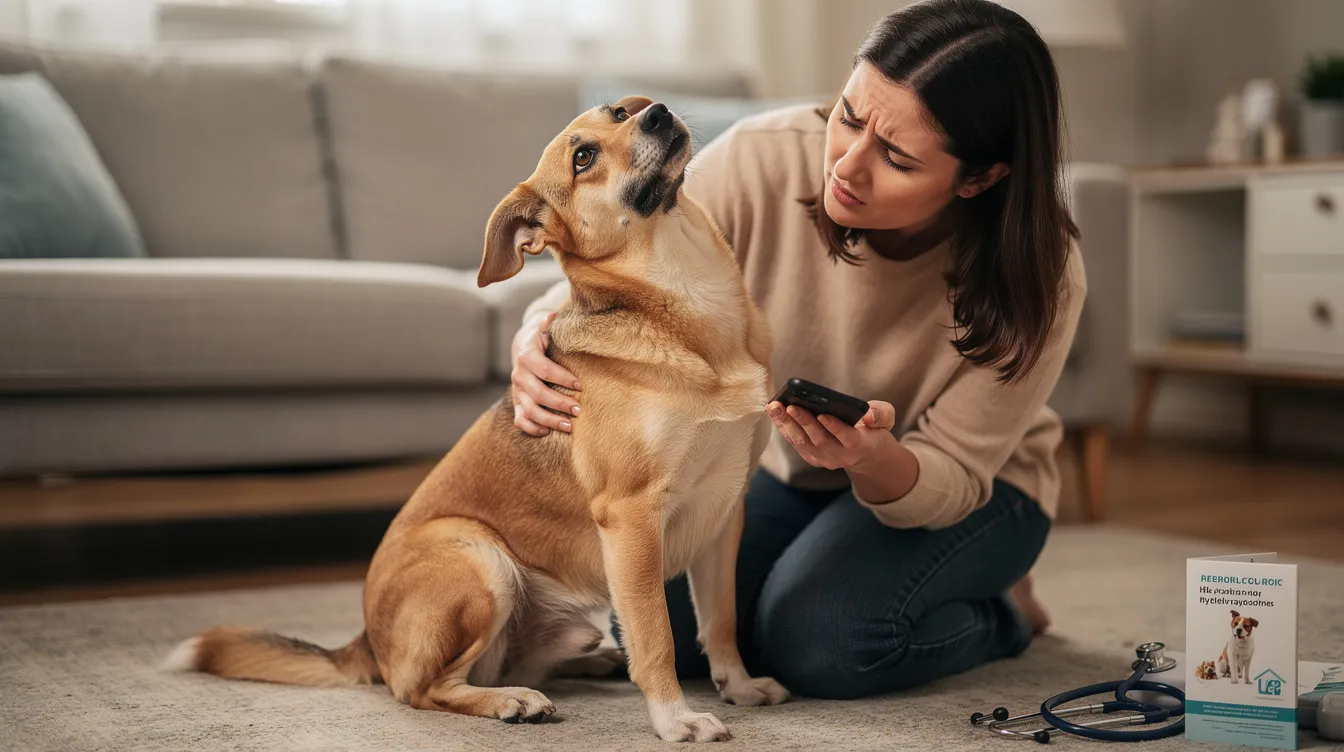
A consistent head tilt that persists beyond normal interaction, or one that appears alongside other symptoms, crosses the line from behavioral to medical. A sudden head tilt should prompt a veterinary evaluation if other symptoms are present.
Identifying Concerning Head Tilts
Seek immediate veterinary care for head tilt with additional symptoms. The following patterns signal a medical problem:
- Persistent head tilting lasting more than 24 hours. A more persistent head tilt that does not resolve after a stimulus ends is the single clearest red flag. A persistent head tilt may indicate an ear infection or vestibular system dysfunction.
- Head tilting accompanied by loss of balance or coordination. If a dog’s balance is impaired and it stumbles, circles, or falls, the vestibular system or nervous system may be involved.
- Sudden onset head tilting with disorientation. Senior dogs are particularly susceptible to idiopathic vestibular disease, which produces acute onset of tilt, nystagmus, and ataxia. In a study of 188 dogs with peripheral vestibular disease, 185 (98%) presented with head tilt; median age was 6.9 years.
- Head tilting with ear discharge or odor. Infection of the dog’s middle ear or external ear canal often produces visible discharge. Middle ear infections can progress to affect the inner ear and vestibular system if untreated.
- Abnormal eye movements. Nystagmus (involuntary horizontal or vertical eye movements) is a hallmark of vestibular disease and distinguishes medical tilts from behavioral ones.
Common Medical Causes
| Condition | Symptoms | Urgency Level |
|---|---|---|
| Ear Infections (Otitis Media/Interna) | Head tilting, scratching, ear discharge or odor, pain; infection of the external ear canal or dog’s middle ear | Moderate; treat early to prevent progression |
| Idiopathic Vestibular Disease | Balance loss, nystagmus, nausea, head tilt, ataxia; most common in senior dogs | High; acute onset, but many dogs recover within 2–3 weeks |
| Central Neurological Issues (brain tumors, strokes, encephalitis) | Confusion, seizures, facial paralysis, altered consciousness, progressive deficits | Emergency; requires MRI/CT and specialist referral |
| Drug/Toxin-Induced | Vestibular signs following medication exposure (e.g., metronidazole overdose) | High; often reversible when the agent is removed |
Ear infections are a common cause of dog head tilt. Vestibular disease can cause head tilt and balance issues. Neurological disorders may lead to a dog’s head tilt. The distinction between peripheral and central vestibular disease matters for prognosis: peripheral vestibular disease involves inner ear structures and spares consciousness, while central vestibular disease involves the brainstem or cerebellum and carries risk of seizures and more severe neurological deficits.
In a UK veterinary database from 2016, vestibular disease appeared in approximately 0.08% of dogs under primary care. Among 759 vestibular disease cases, 530 (70%) showed head tilt as a clinical sign. Of those where tilt side was recorded, 43.77% tilted left and 39.24% tilted right.
Recovery outlook: among 128 dogs with idiopathic vestibular disease, 50% recovered fully, while roughly 27% retained a long-term head tilt. Dogs recover most rapidly in the first 2–4 days, with major improvement by 7–14 days. Treatment includes anti nausea medications, antibiotics for infections, and supportive care. Residual head tilt often persists but does not impair quality of life.
Common Training and Behavioral Challenges
Understanding how a dog head tilt depends on context helps trainers and owners distinguish between engagement, confusion, and medical warning signs. These distinctions directly affect training decisions.
Excessive Attention-Seeking Through Head Tilting
When dogs learn that tilting produces rewards, the behavior can become disconnected from its original sensory purpose. If your dog tilts its head every time you look at it (rather than in response to auditory stimulation or a verbal cue), the behavior has likely been reinforced into an attention-seeking pattern.
The fix: reward the tilt only when it occurs during active training or command processing. Ignore tilts that appear outside these contexts. This approach uses the same redirecting unwanted behaviors principles that apply to jumping, barking, or pawing for attention. Dogs that enjoy human interaction will adapt to the new reinforcement schedule within weeks.
Confusion Between Normal and Concerning Head Tilts
Dog owners often struggle to determine whether a head tilt warrants a vet visit. Track three variables: duration (seconds vs. hours), context (response to a sound vs. no apparent trigger), and accompanying signs (normal behavior vs. balance loss, nystagmus, or ear discharge). A dog judge of the situation can be as simple as keeping a brief log noting time, trigger, duration, and any other symptoms for a week. If patterns emerge, share the log with your veterinarian.
Board and train programs, such as a dog boot camp, should include head tilt monitoring as part of daily health checks. Trainers who document onset, side, duration, and context can catch medical issues before they progress.
Using Head Tilting as a Training Indicator
A head tilt during a verbal command often signals that the dog is processing what it hears. In the GWL dog study, individual dogs showed a stable bias for tilt direction that remained consistent over six months, suggesting the tilt reflects an internal cognitive process rather than random movement. Dogs more often tilted to the right under communicative speech with familiar words, consistent with left-hemisphere processing of language.
During off-leash behavior training, a head tilt when you give a verbal command indicates the dog is listening. If the tilt is followed by correct execution, the dog understood. If the tilt is followed by hesitation or the wrong behavior, the cue needs to be clearer. Using head tilting as a real-time feedback mechanism helps trainers adjust advanced dog training techniques to the dog’s comprehension level.
Conclusion and Next Steps
Dogs tilt their heads to hear better, see past their muzzles, and respond to speech they find meaningful. A brief, context-dependent head tilt is normal canine communication. A persistent head tilt lasting more than 24 hours, or one accompanied by balance loss, eye movement abnormalities, or ear discharge, requires veterinary evaluation.
Immediate steps for dog owners:
- Observe whether your dog’s head tilts occur in response to specific sounds, words, or visual cues
- Note the duration, direction, and frequency of tilts over one week
- Check for accompanying signs: ear odor, balance issues, nystagmus, or behavioral changes
- Schedule a veterinary consultation if tilts persist beyond 24 hours or appear with any secondary symptoms
- In training contexts, reward head tilts that coincide with genuine engagement and command processing
For more on reading your dog’s body language and building reliable communication, explore resources on understanding dog obedience training and how it helps behavior and training dogs for emotional intelligence.
Additional Resources
- Free phone consultation: Contact Off Leash K9 Training of Sterling to discuss your dog’s behavior with a professional trainer
- Behavior modification programs: Explore dog behavior training in Sterling for structured programs addressing attention-seeking and communication challenges
- Veterinary guidance: The AKC’s overview of vestibular disease provides additional detail on diagnostics and treatment protocols for persistent head tilts
