 Skip to content
Introduction
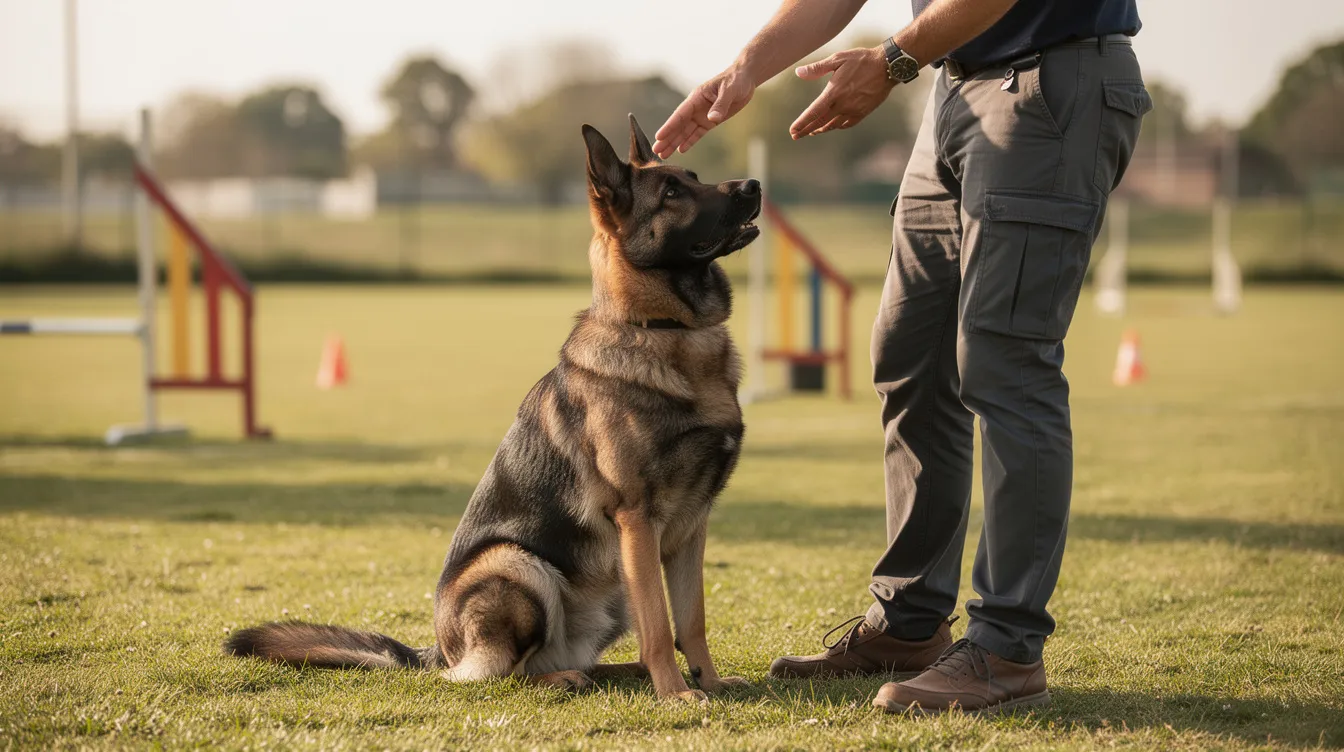
German Shepherd training demands a specialized approach that goes far beyond what works for most dogs. The German Shepherd dog was originally developed in Germany around 1899 by Captain Max von Stephanitz as a working breed built for herding, utility, and obedience under stress – not as a companion animal. That heritage means this breed’s intelligence, drive intensity, and sensitivity to handler inconsistency require structured, purposeful training methods that typical puppy obedience class curricula simply don’t address.
This guide covers the full spectrum of German Shepherd training: from German Shepherd puppy training fundamentals and early socialization through advanced off-leash obedience, behavior modification, and distraction-proof command work. It is written for German Shepherd owners in Northern Virginia who want reliable, real-world results – whether you’re raising a GSD puppy, working with adult dogs, or addressing behavioral issues in rescue dogs. Topics outside this guide’s scope include competitive sport training (IPO/IGP) and breeding-specific guidance.
The direct answer: training a German Shepherd successfully requires consistent structure, impulse control development, and clear leadership – not treat-dependent methods alone. Positive reinforcement is the most effective training method for German Shepherds, but it must be paired with boundaries, rules, and progressive distraction work to produce a well-trained dog that responds reliably in everyday life.
By the end of this guide, you will understand:
- How to build reliable off-leash obedience tailored to the German Shepherd breed
- How to eliminate jumping, pulling, and other bad habits through impulse control
- How to develop distraction-proof commands that hold in real-world environments
- How to resolve behavioral issues including reactivity, separation anxiety, and excessive barking
- When to seek help from professional dog trainers for complex behavior modification
Understanding German Shepherd Temperament and Training Requirements
The German Shepherd is consistently ranked among the most intelligent dogs in canine research, and they are one of the most popular dog breeds worldwide. But intelligence alone doesn’t make training easy. Understanding what drives a German Shepherd – and how that differs from other breeds – is the essential first step before any training process begins.
Working Line vs. Pet Line German Shepherds
Working line German Shepherds are bred for performance: high prey and defense drive, strong nerve strength, environmental stability, and physical endurance. These dogs typically have straighter backs, leaner muscle, and sturdier bone structure. They excel as a police dog, protection dog, or search-and-rescue partner. Working line German Shepherds are more intense and driven than pet lines, and they require significantly more training and discipline to channel that energy productively.
Show line German Shepherds are bred primarily for conformation and temperament stability. They tend toward calmer indoor behavior and are often easier to live with than working lines, making them more forgiving of handler inconsistency. Show line German Shepherds are bred for calmness and lower energy. However, they may carry structural health risks – exaggerated angulation and sloped backs can contribute to hip dysplasia and joint stress. Working-line GSDs generally have lower incidences of these orthopedic issues and often live 12–13 years with good quality of life.
Training intensity must match line type. Working-line German Shepherds need daily structured work – protection training, tracking, sport – to avoid destructive behavior or chronic over-arousal. Pet-line dogs still need mental stimulation and consistent boundaries, but they can settle more readily with shorter training sessions. Choosing the wrong line for your lifestyle is a leading cause of German Shepherds being rehomed.
An emerging industry trend is worth noting: many breeders and professional trainer networks are pushing back against extreme show-line traits in favor of blended lines that retain working drive alongside family-friendly temperaments.
The German Shepherd Drive System
Every German Shepherd operates through a system of drives that directly influence the training approach and success rates you can expect:
- Prey drive governs response to moving objects – squirrels, joggers, bicycles. High prey drive, if unmanaged, leads to chasing, lunging, and focus problems. German Shepherds need to learn impulse control to prevent chasing.
- Protection/defense drive fuels guarding behavior, territorial alertness, and threat assessment. This is what makes the German Shepherd a natural guard dog, but unchecked protection drive causes excessive barking, over-guarding, or fear aggression toward strangers. German Shepherds can be aloof and suspicious toward strangers, which proper socialization helps moderate.
- Pack drive reflects the breed’s deep desire for social structure and handler attachment. German Shepherds love connection with their people, but high pack drive can manifest as separation anxiety or velcro behavior when structure is absent.
Understanding your dog’s dominant drive profile helps you select the right motivation during training – prey-driven dogs respond well to toy-based work, while pack-driven dogs may respond better to praise and handler engagement. This knowledge also informs which training tools and environments will produce the best results.
Intelligence vs. Trainability Misconceptions
German Shepherds are highly intelligent and eager to please – they rank among the top working/obedience breeds in Stanley Coren’s research. But many GSD owners discover that intelligence creates its own training challenges. Because a German Shepherd thinks critically and observes handler behavior closely, they quickly detect inconsistencies: mixed signals, unreinforced expectations, or patterns that allow selective compliance.
The result? A German Shepherd that obeys perfectly in the kitchen but ignores recall at the park. One that sits for treats but body-checks guests at the door. This isn’t stubbornness – it’s a highly intelligent breed exploiting loopholes in the training process. Unlike the easiest breeds to train, German Shepherds require precision in timing, consistency across all family members, and progressive challenge to maintain reliability.
This is exactly why understanding temperament must precede any training attempts. Without this foundation, even well-intentioned training methods produce unreliable results.
Essential German Shepherd Training Foundations
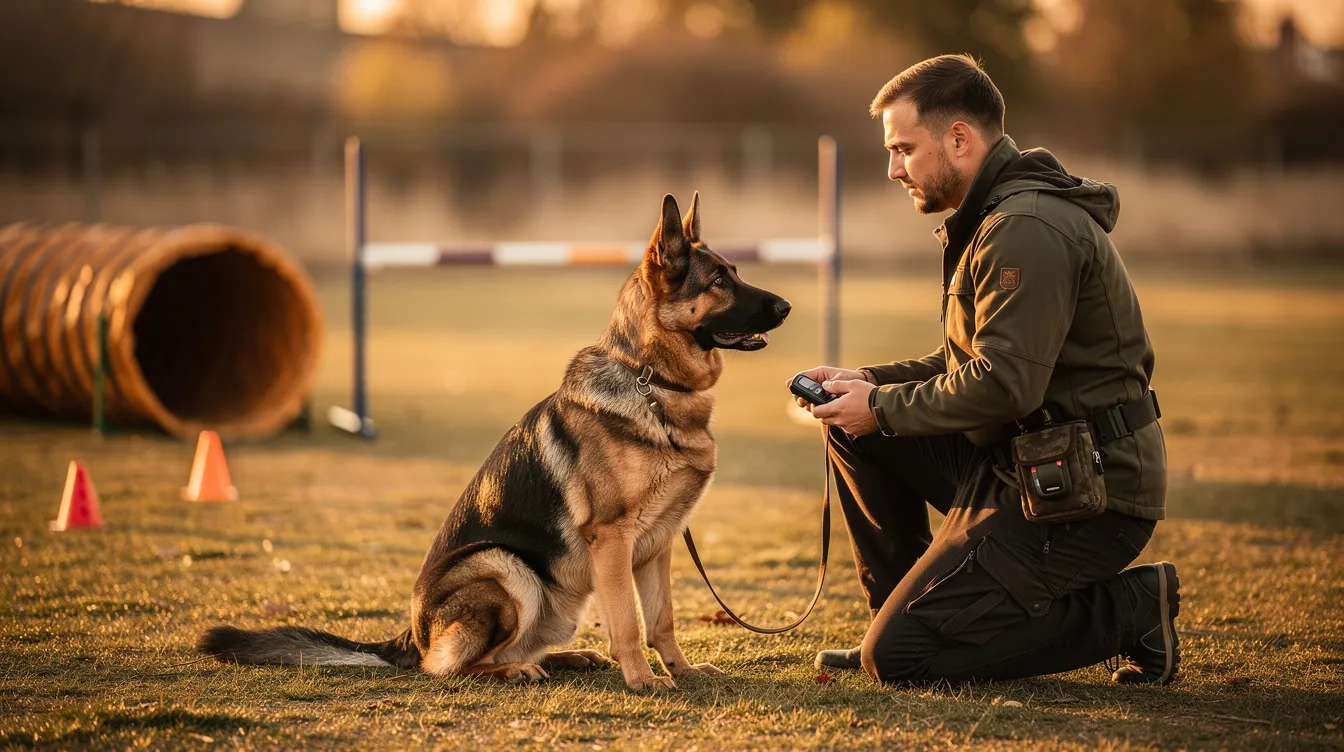
With temperament understanding established, the next step is building the core training foundations that every german shepherd dog needs. These foundations – impulse control, leadership, and socialization – are the infrastructure upon which all advanced commands and obedience training depend.
Impulse Control Development
Impulse control is the ability for your dog to pause or inhibit an instinctive response – jumping, lunging, chasing, barking – until given permission. For German Shepherds, this is arguably the single most important training foundation. German Shepherds need to learn impulse control to curb problem behaviors including excessive barking and digging.
Self-control exercises help German Shepherds learn to stay calm in situations that would otherwise trigger reactive or undesirable behavior. Impulse control can be taught by requiring commands before rewards – asking for a sit before meals, a wait before doorways, a “leave it” before picking up a toy. Training sessions should focus on impulse control for better behavior across all environments.
Methods that build impulse control effectively include:
- Boundary training (place/stay commands with gradually increasing duration)
- Delayed reward games (“leave it,” “wait,” structured fetch requiring a pause before release)
- Door manners and threshold training – the dog must hold position before passing through any doorway
Reliable impulse control is strongly correlated with better off-leash obedience and dramatically reduced problem behaviors. Research on reactive dogs shows that consistent impulse-control exercises reduce leash reactivity and improve calmness around distractions.
Leadership and Structure Requirements
German Shepherds need a strong leader to thrive and be well-behaved. But leadership in modern dog training doesn’t mean dominance or physical force – it means being a calm, confident handler who sets clear rules and boundaries consistently.
Establishing household rules from day one helps in early boundary setting. Structure looks like this in everyday life:
- A regular exercise and training schedule
- Consistent rules about greeting people (no jumping – ever, from anyone)
- Designated rest areas using the place command
- Entrance and exit control (handler goes through doors first)
- Consistent consequences applied by all family members
A structured daily routine effectively incorporates training throughout the day, rather than confining it to isolated training sessions. This structure supports German Shepherd mental well-being – most German Shepherds without clear structure become anxious, overly protective, or destructive. The breed requires mental work as much as physical exercise to remain balanced.
Avoid punishment-based methods to maintain trust and encourage learning. Leadership built through trust, consistency, and clear communication produces a well-behaved dog that responds out of respect and engagement – not fear.
Socialization for Balanced Protection Instincts
Socialization is crucial for German Shepherd puppies before 16 weeks old. This critical window – roughly 8 to 16 weeks of age – is when a GSD puppy’s brain is most receptive to new experiences. Good socialization during this period literally shapes how the dog perceives the world for its entire life.
German Shepherds should be exposed to various people and environments: individuals of different appearances, other dogs, children, varied surfaces, traffic sounds, and novel settings. Socialization builds confidence in German Shepherd puppies, helping them differentiate between genuine threats and normal environmental stimuli.
Proper socialization helps prevent aggression in German Shepherds. Under-socialized German Shepherds may view everyone as a threat, leading to fear aggression, reactive lunging, or territorial behavior that becomes extremely difficult to modify in adult dogs.
The key balance for this breed: early socialization with calm leadership moderates defense and protection drive so that the dog learns to discriminate stimuli rather than default to overreaction. You want a confident, socially appropriate dog – not one whose natural guard dog instincts have been either suppressed or left entirely unchecked. Early socialization is crucial for building a well-adjusted German Shepherd.
These three foundations – impulse control, leadership, and proper socialization – create the platform for every practical training method that follows.
Proven German Shepherd Training Methods and Techniques
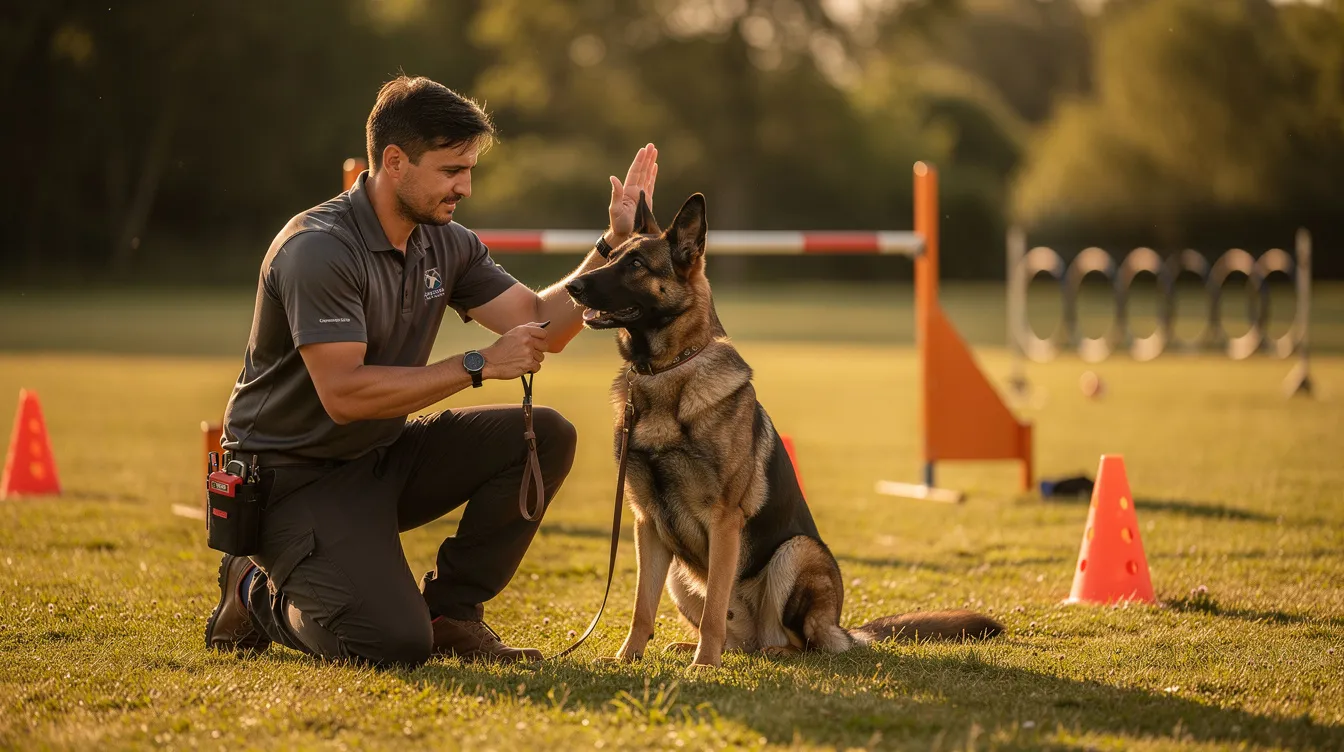
Traditional treat-based methods often fail with German Shepherds because the breed’s intelligence allows them to work the system – obeying only when food is visible, ignoring commands when rewards aren’t present. Effective shepherd training combines positive reinforcement with structured progression, accountability, and distraction proofing. Training should start as soon as the puppy comes home, and German Shepherds require consistent training from an early age to prevent behavioral issues from taking root.
The Off Leash K9 Training System
The Off Leash K9 Training system is built specifically for producing real-world, distraction-proof obedience – making it exceptionally well suited for the German Shepherd breed. Here is how the system progresses:
- Foundation Building (Weeks 1–2): Establish basic commands – sit, down, place, heel, stay, come – in low-distraction settings. Use high value treats and praise. Introduce structure and clear boundaries. Build impulse control through short-interval waits and door manners. Short, frequent training sessions maintain a dog’s attention and enthusiasm during this phase. Basic obedience includes commands such as Sit, Stay, Come, and Leave It.
- Confidence and Drive Exposure (Weeks 2–4): Introduce new surfaces, sounds, and mild distractions. For working dogs with high prey drive, incorporate toy-motivated tasks. Using shaping techniques encourages problem-solving and progressive development of desired behavior. German Shepherds thrive on mental stimulation and structured tasks at this stage.
- Long-Line and Leash Pressure Phase: Use 15- to 30-foot training lines to gradually increase distance for recall training and stay work while maintaining safe control. Use consistent leash pressure cues and reward compliance generously. Leash manners can be taught by stopping movement when the dog pulls and rewarding loose-leash behavior.
- Remote Reinforcement Introduction: For dogs progressing toward off-leash reliability, condition the e-collar without activation, find the working level (lowest level that gains attention without stress), then use brief, consistent reinforcement of already-known commands – maintaining a high reward-to-correction ratio (4:1). This is never a substitute for foundation training; it extends accountability at distance.
- Distraction Proofing and Real-World Reliability (Weeks 4–6+): Add duration (longer stays), distance (handler further away), and distractions (people, other dogs, wildlife). Gradually increasing distractions during training ensures success in different environments. Begin generalizing commands to novel contexts – parks, busy sidewalks, outdoor dining areas.
- Off-Leash Transition: Once recall is reliable 9 out of 10 times indoors and outdoors on a long line, gradually move to off-leash work in safe, contained areas. Emphasize uncontrolled distractions and build reliability through check-ins and high-value rewards for returning to handler. Learn more about best locations for off-leash training in the Northern Virginia area.
Important: this training timeline varies by dog. Working line German Shepherds may move faster or need more repetition at each step. Pet-line dogs may need additional drive-motivation work. Clicker training accelerates learning through precise timing and can be integrated at any phase.
Training Tool Comparison for German Shepherds
Selecting the right tools for training your German Shepherd depends on your dog’s drive level, size, and specific challenges. Here is a comparison of common training tools:
| Tool | Best Use Case | Advantages | Risks / Limitations |
|---|---|---|---|
| Flat collar | Basic leash walking, ID | Low cost; non-aversive when used properly | Poor control with a big dog that pulls; choking risk with strong pullers |
| Martingale collar | Dogs who slip collars | More control without choking; gentler than choke chains | Can cause pressure if misused; still requires loose leash walking skills |
| Head halter | Pulling, lunging, leash reactivity | Strong leverage and head control; good interim tool | Can be uncomfortable; risk of injury with jerky corrections; requires gradual introduction |
| Prong collar | Strong pullers in structured walks | Effective attention tool; works quickly when correctly fitted under professional guidance | Misuse causes injury or fear; not for novice handlers alone |
| E-collar | High-drive off-leash proofing, recall, advanced heel | Allows corrections at distance; supports off-leash transition | Must be conditioned at lowest effective level; requires reward-based foundation first; needs professional trainer guidance |
| Long line (30–50 ft) | Transition between on- and off-leash | Safety while allowing distance; essential for proofing recall | Tripping hazard; handler must understand management |
No single tool is a solution on its own. Tools support the training approach – they don’t replace consistent leadership, impulse control development, and structured practice.
Advanced Command Development
Reliable recall under distraction: This is the command that keeps your German Shepherd safe. Use high value treats and toys, and practice near distractions progressively. Never use recall for undesirable outcomes (ending playtime, going to the crate) – the moment recall becomes associated with punishment, most dogs stop responding. Use a long line and fade it gradually as reliability improves.
Place command: Teaching a designated spot where the dog stays until released builds extraordinary impulse control and offers calm zones for real-world situations – guests arriving, cooking, car doors opening. Start with short durations in quiet settings, then add distance and distraction. This is one of the most valuable commands for building a dog’s confidence and creating a well behaved dog in any environment.
Heel command for loose leash walking: Begin by marking the desired position (beside or slightly behind you), reinforcing with verbal praise. Add direction changes, stops, and turns. The goal is a dog that maintains position during walks without pulling – on or off leash. This transforms walks from a battle into a structured, enjoyable activity for both you and your German Shepherd.
With these methods and commands established, you’re equipped to address the specific challenges that are most common in the German Shepherd breed.
Common German Shepherd Training Challenges and Solutions
Certain behavioral issues appear far more frequently in German Shepherds than in different breeds due to their drive levels, intelligence, and physical power. These aren’t signs of a bad dog – they’re predictable breed-specific tendencies that respond well to structured intervention.
Pulling and Leash Reactivity
Most German Shepherds that pull aren’t being defiant – they’re operating without impulse control or clear expectations. The solution centers on leadership and structured leash work, not equipment upgrades alone.
Use a pre-walk reset routine: pause before attaching the leash, require attention and a calm sit, then release with a cue. This prevents the “launching” behavior that starts many walks poorly. Practice pressure-release techniques where the leash goes slack the instant the dog returns to position. Long-line practice helps generalize this behavior to new environments. Head halters or prong collars may provide short-term management if used correctly under a professional trainer’s guidance, but the lasting fix is impulse control and consistent expectations.
Jumping on People
German Shepherds often jump up due to excitement – and when a big dog does this, it’s a safety concern, not just an annoyance. German Shepherds can develop nipping habits if not trained early, and jumping often accompanies mouthy greetings.
The solution is unwavering boundary training: teach a sit-to-greet protocol where the dog receives zero attention (no eye contact, no pushing away, no verbal correction) until all four paws are on the ground. Reward only the desired behavior. Every person who enters your home must follow the same protocol – inconsistency from any family members reinforces the bad behavior.
Selective Hearing and Distraction Issues
Many German Shepherds exhibit selective hearing during distractions. This is the breed’s intelligence working against you: a German Shepherd that only obeys in quiet rooms has learned that commands are optional when something more interesting is happening.
The fix is closing every loophole. Never give a command you cannot reinforce. Always make recall more rewarding than whatever the dog is currently paying attention to. Use variable rewards so the dog can’t predict when the high value treats appear. Proof every command under increasing levels of distraction, distance, and duration. If your German Shepherd ignores you at the park, you haven’t trained at the park – you’ve only trained in your living room.
Separation Anxiety and Destructive Behaviors
Separation anxiety is common in this high-drive, high-pack-bond breed. German Shepherds love their people deeply, and that attachment can become problematic without proper preparation. Crate training helps reduce separation anxiety in puppies and facilitates housetraining for German Shepherds. Crate training can also help prevent destructive behaviors in puppies when used appropriately.
Introduce the crate gradually to make it a positive space – never use it as punishment. Puppies should not be crated for more than a few hours at a time. Desensitize departures by starting with very brief absences and building duration slowly. Provide mental stimulation through puzzle toys, scent work, and enrichment so the dog is mentally fatigued, not just physically tired. For severe cases, consider working with a behavior specialist or creating a dedicated safe space for your dog.
Excessive Barking and Alert Behaviors
Because of their protection and defense instincts, most German Shepherds will alert-bark at passersby, delivery trucks, unusual sounds, and perceived threats. Impulse control training helps curb excessive barking and digging – but the solution must balance the dog’s natural alertness with appropriate response control.
Teach a “quiet” cue: allow one or two alert barks, acknowledge the stimulus (“thank you”), then redirect and reward silence. Desensitize to common triggers through controlled exposure at early age. Limit visual access to high-traffic areas if the dog is barrier-reactive. Most importantly, leadership and structure help the dog feel secure rather than hyper-vigilant – a German Shepherd that trusts its handler’s judgment doesn’t feel the need to guard every window.
When these challenges persist despite consistent home training, it’s time to consider working with professional dog trainers who specialize in the breed.
Conclusion and Next Steps
Training a German Shepherd is more demanding than training most dogs – but the reward is one of the best dogs you will ever own. The German Shepherd breed offers unmatched loyalty, intelligence, and versatility when paired with structured, consistent training that channels their drives rather than suppressing them. German Shepherds excel at obedience and can learn commands quickly when the training approach matches their temperament and needs.
Your immediate next steps:
- Assess your German Shepherd’s current training level – identify which foundations (impulse control, leadership, socialization) need strengthening and which specific behavioral issues are priority concerns.
- Establish structure today – implement consistent rules, a regular schedule, and clear expectations across all family members. Even simple commands practiced consistently create momentum.
- Contact Off Leash K9 Training of Sterling for a free phone consultation to develop a customized training plan based on your dog’s line type, drive profile, and specific challenges.
- Consider board and train programs for intensive behavior modification, aggression or reactivity issues, or advanced off-leash training that accelerates results beyond what home training alone can achieve.
Related topics worth exploring as your German Shepherd training progresses include therapy dog certification, advanced protection training for working dogs, and competitive dog sports that provide ongoing mental stimulation and physical exercise throughout your German Shepherd’s entire life.
Professional German Shepherd Training Resources
Off Leash K9 Training of Sterling serves German Shepherd owners throughout Northern Virginia with programs designed for this breed’s unique requirements:
- Private lessons and basic obedience – one-on-one training sessions tailored to your dog’s temperament and your household’s specific needs
- Board and train programs – intensive 1- to 3-week immersion programs including reactivity-specific board and train for dogs with aggression or fear aggression challenges
- Behavior consulting – professional assessment and modification plans for complex behavioral issues
- Free phone consultation – discuss your German Shepherd’s needs and receive program recommendations at no cost
- Lifetime refresher training guarantee – every graduate has access to ongoing support, ensuring your German Shepherd remains a well-trained companion for years to come
German Shepherds are exceptionally great dogs when trained by someone who understands the breed. Whether you’re starting with a GSD puppy or addressing long-standing bad behavior in an adult dog, the right training methods and professional guidance transform potential into performance.
